
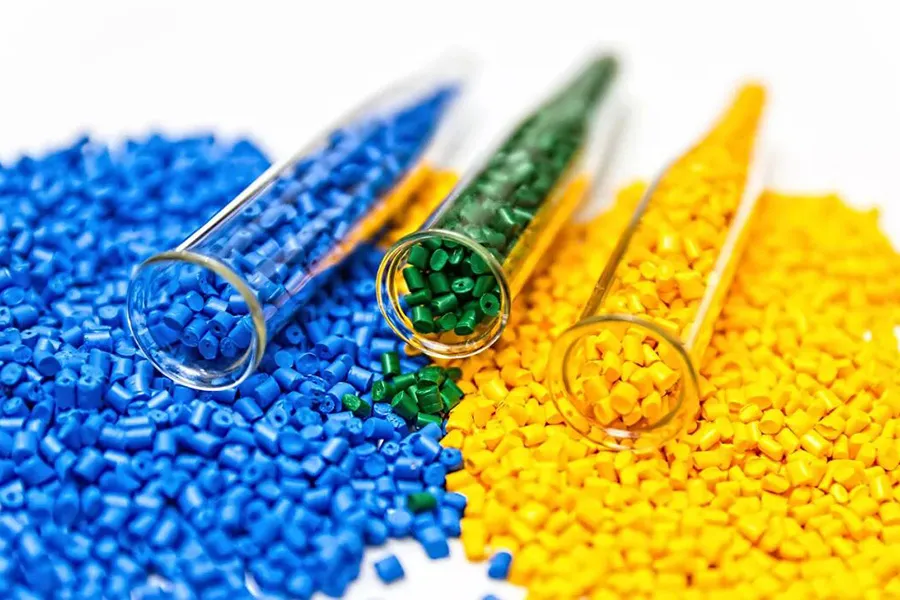
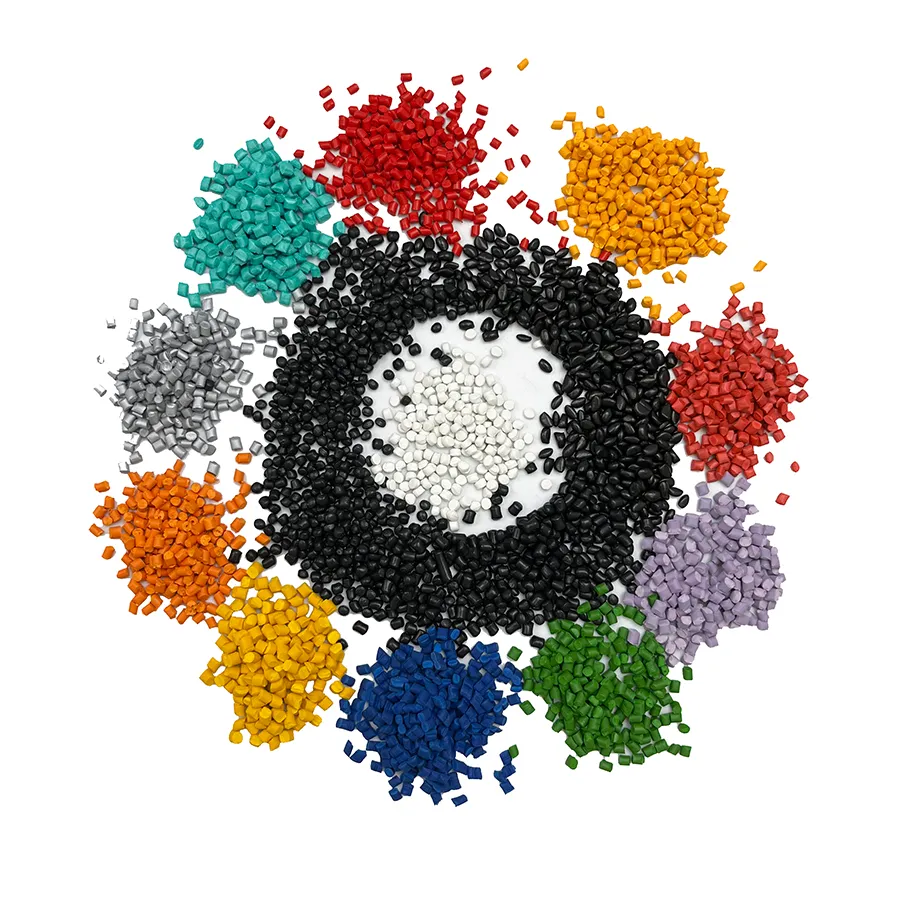
The Color Masterbatch (also known as “color master batch” or “colormasterbatch”). It is a novel type of specialized coloring agent for polymer materials, also referred to as a “Pigment Preparation”. Color masterbatches are primarily used in plastics applications. A masterbatch consists of three fundamental components—pigments (or dyes), a carrier, and additives—and is produced as an aggregate in which a super-normal concentration of pigment is uniformly dispersed within a resin matrix. It can be described as a “Pigment Concentrate”; consequently, its coloring power is significantly higher than that of the raw pigment itself. During processing, a small quantity of masterbatch is blended with uncolored resin to produce a colored resin or finished product that achieves the desired pigment concentration.
1. Basic Components of Color Masterbatches
1.1 Pigments or Dyes
Pigments are further categorized into organic pigments and inorganic pigments.
Commonly used organic pigments include: Phthalocyanine Red, Phthalocyanine Blue, Phthalocyanine Green, Fast Red, Macromolecular Red, Macromolecular Yellow, Permanent Yellow, Permanent Violet, Azo Red, etc. Commonly used inorganic pigments include: Cadmium Red, Cadmium Yellow, Titanium Dioxide, Carbon Black, Iron Oxide Red, Iron Oxide Yellow, etc.
1.2 Carrier
This serves as the matrix (base material) for the color masterbatch. For specialized masterbatches, the resin selected as the carrier is typically the same type of resin used in the final product; this ensures optimal compatibility between the two materials, although the flow properties of the carrier must also be taken into consideration.
1.3 Dispersant
Dispersants facilitate the uniform distribution of pigments and prevent them from re-agglomerating. A dispersant should have a melting point lower than that of the carrier resin, exhibit excellent compatibility with the resin, and possess a strong affinity for the pigment. The most commonly used dispersants are low-molecular-weight polyethylene waxes and stearates.
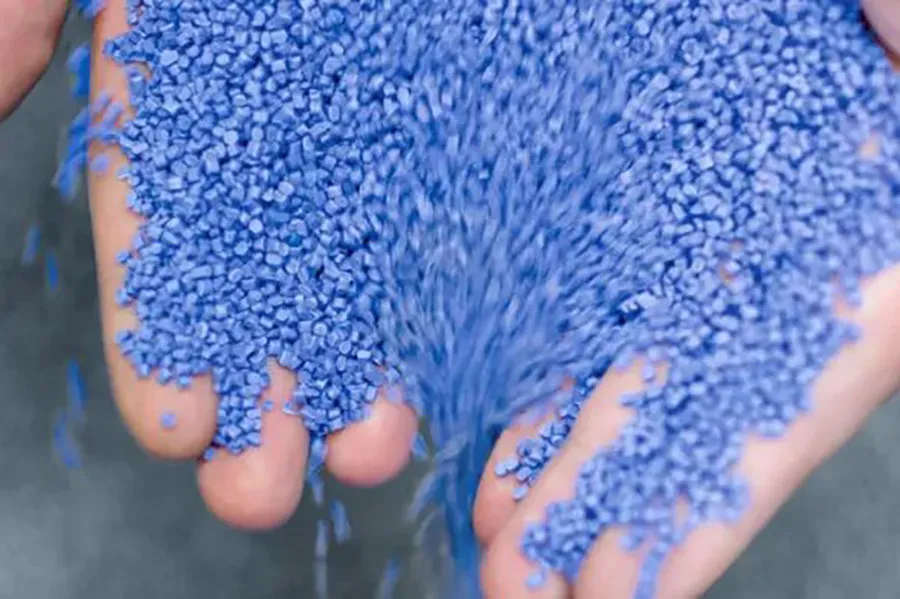
1.4 Additives
These include various functional agents such as flame retardants, brighteners, antimicrobial agents, antistatic agents, and antioxidants; these are typically incorporated only when specifically requested by the client.
Under standard circumstances, color masterbatches do not contain the aforementioned additives.
2. Historical Development
Color masterbatch emerged in the 1960s as a novel coloring product for plastics and fibers. It is a polymer composite produced by uniformly dispersing a super-normal concentration of pigment within a resin matrix. The primary components of a color masterbatch are the coloring agent (pigment/dye), the carrier, and the dispersant.
2.1 Market Demand Growth and Industrial Distribution
According to relevant data, the average annual growth rate of demand for masterbatches in other Asian countries is approximately 7% to 9%; in contrast, my country’s average annual demand growth rate stands at around 20%. It is projected that China will become the fastest-growing market in terms of masterbatch demand. my country has already established itself as the largest producer and consumer within the Asian masterbatch market. There are currently 330 enterprises in my country engaged in masterbatch production; among these, 300 are dedicated to plastic-grade masterbatches, while 30 focus on fiber-grade masterbatches. These production facilities are primarily concentrated in provinces and municipalities such as Fujian, Guangdong, Shandong, Zhejiang, Jiangsu, Shanghai, Liaoning, Tianjin, Beijing, and Hebei.
2.2 Technological Gaps, Product Development, and Future Directions
In countries with advanced masterbatch technology, there exists a comprehensive range of raw materials—including pigments and dispersants—leading to the formation of a product structure characterized by serialization and specialization. In terms of product development, Chinese masterbatch manufacturers have successfully developed specialized masterbatches for applications such as fibers, films, wires and cables, polyolefins, PVC, and injection-molded products. Experts in the field anticipate that future masterbatch development will trend toward multifunctionality, higher pigment concentrations, and increased technological sophistication, with the evolution of masterbatches proceeding in tandem with advancements in production technologies.
3. Advantages of Using Color Masterbatches
3.1 Enhances Pigment Dispersion within Finished Products
During the masterbatch manufacturing process, pigments undergo a refinement treatment designed to improve both their dispersibility and their tinting strength. The carrier resin in a specialized masterbatch is identical to the specific type of plastic used in the final product; this ensures excellent compatibility, allowing pigment particles to disperse thoroughly throughout the product’s plastic matrix once heated and melted.
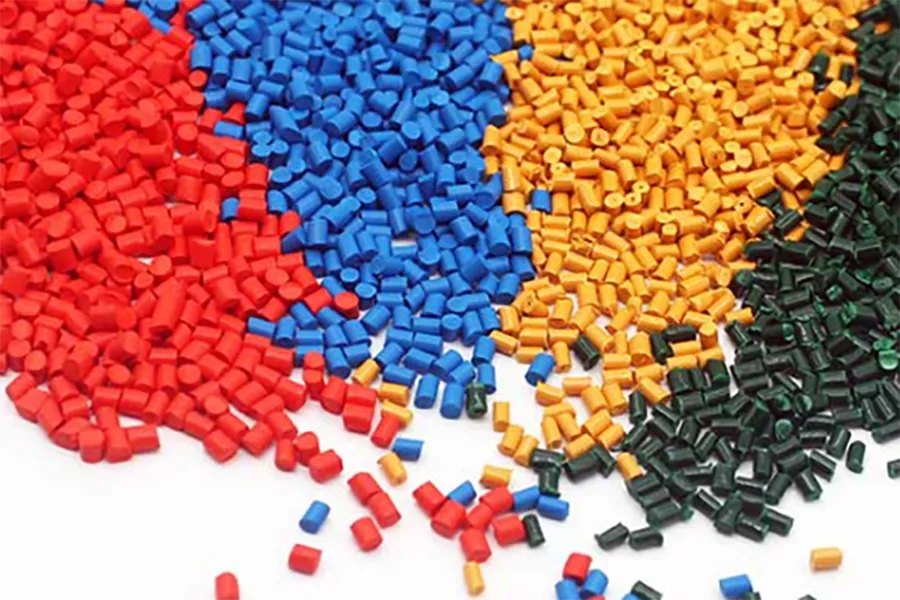
3.2 Facilitates the Preservation of Pigment Chemical Stability
If raw pigments are used directly, they are exposed to air during storage and processing, making them susceptible to moisture absorption, oxidation, and other degradation phenomena. However, when formulated into a masterbatch, the resin carrier effectively isolates the pigment from air and moisture, thereby ensuring the long-term stability and quality of the pigment.
3.3 Ensures Color Consistency in Finished Products
Color masterbatch granules are similar in size and shape to the resin granules, making metering and dosing more convenient and precise. During mixing, they do not adhere to the walls of the mixing container and blend more uniformly with the resin. Consequently, this ensures a consistent additive ratio, thereby guaranteeing consistent color quality in the final products.
3.4 Protects Operator Health
Pigments are typically in powder form and tend to become airborne during addition and mixing; if inhaled, these airborne particles can pose health risks to the operators.
3.5 Heat Resistance
The heat resistance rating of a specialized color masterbatch is generally tailored to match the specific plastic used in the final product, allowing for safe and reliable use under normal operating temperatures. However, discoloration—to varying degrees—may occur under two specific circumstances: (1) if the processing temperature exceeds the normal operating range; or (2) if the machine remains idle (shut down) for an extended period.
4. What is the Difference Between Granulation Coloring and Masterbatch Coloring?
Compared to the granulation coloring method, masterbatch coloring offers the following advantages:
- Single-Step Processing: Coloring and product molding are completed simultaneously in a single step. This eliminates the additional heating cycle required for the plastic during the granulation coloring process, thereby helping to preserve the quality and integrity of the plastic products.
- Process Simplification: It streamlines and simplifies the overall production workflow for plastic products.
- Significant Energy Savings: It allows for substantial savings in electrical energy consumption.
4.1 Will Products Colored with Masterbatch Never Fade?
No product is absolutely immune to fading; products colored using masterbatches can still undergo discoloration. However, the degree of fading varies depending on the specific grade and quality of the product—in some cases, the fading may be quite noticeable, while in others, it may be barely perceptible.
4.2 General-Purpose Masterbatch vs. Specialized Masterbatch
- Specialized Masterbatch: A masterbatch formulated specifically for a user’s designated plastic product; it is manufactured using the *exact same type* of plastic as the final product to serve as the carrier resin. For instance, PP color masterbatches and ABS color masterbatches utilize PP and ABS, respectively, as their carrier resins.
- Universal Color Masterbatches: These also employ a specific resin (often low-melting-point PE) as a carrier; however, they are designed to be suitable for coloring resins *other than* their own carrier resin.
While universal color masterbatches are relatively simple and convenient to use, they suffer from numerous drawbacks; therefore, it is generally recommended to opt for application-specific color masterbatches instead.
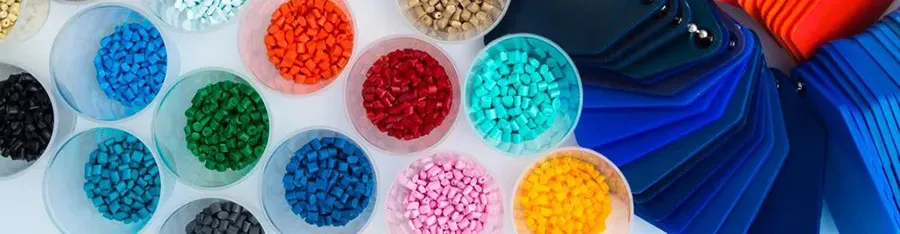
4.3 Why do many companies choose not to manufacture universal color masterbatches?
Globally, the vast majority of reputable color masterbatch manufacturers typically do not produce universal color masterbatches.
Universal color masterbatches are plagued by a number of disadvantages. In reality, the “universal” scope of these products is quite limited, and they tend to exhibit inferior technical performance and economic efficiency. Specifically, these shortcomings manifest as follows:
- Poor Predictability of Coloring Results
The primary function of a color masterbatch is to impart color. However, the pigments within a universal color masterbatch may present different shades or hues when incorporated into different types of plastics; consequently, the final coloring effect is difficult to predict with precision.
- Negative Impact on Other Properties of Plastic Products
This is particularly true regarding mechanical strength; products colored with universal masterbatches are more prone to deformation and warping—an issue that is especially pronounced when working with engineering plastics.
- Higher Cost
To ensure their “universal” compatibility across various resins, universal color masterbatches often utilize pigments with exceptionally high heat resistance ratings—a practice that frequently results in unnecessary material waste and increased production costs.
4.4 Can a masterbatch provide additional functions beyond just coloring?
Yes, a color masterbatch can indeed incorporate several of these functionalities simultaneously, provided that the manufacturing facility receives specific requirements to that effect.
Occasionally—even if the client has not explicitly requested them—the color masterbatch manufacturer may recommend the addition of certain auxiliary agents based on the specific needs of the final product (e.g., incorporating brightening agents into the masterbatch formulation). Naturally, the inclusion of such additives will result in an increase in the product’s overall cost.
5. How to Use Color Masterbatches?
Using color masterbatches is a very simple process: one merely needs to mix the masterbatch granules with the base resin granules according to the prescribed ratio; a simple manual mixing process is typically sufficient.
During the operation of processing equipment (such as injection molding machines or extruders), the following points should be carefully observed:
- The mixing barrel (or chamber) of an injection molding machine or extruder typically consists of multiple temperature zones. The zone located closest to the material hopper (feed throat) should be maintained at a slightly higher temperature than the others. This ensures that the color masterbatch melts rapidly upon entering the mixing chamber, thereby facilitating its quick and uniform dispersion throughout the plastic resin—a critical factor in achieving excellent pigment dispersion within the final molded product.
- Apply appropriate back pressure to the injection molding machine; this enhances the mixing efficiency of the screw and facilitates pigment dispersion. A side effect of applying back pressure, however, is a slight reduction in injection speed.
- Slightly increasing the die head temperature of the extruder can enhance the surface gloss of the finished product.
6. How to Determine the Usage Ratio for Color Masterbatches?
The primary criterion for determining the color masterbatch usage ratio is the achievement of a satisfactory coloring effect. As long as the surface of the finished product exhibits a uniform hue—free from streaks or spots—the result is considered acceptable. The color masterbatch usage ratios can be selected based on the guidelines below:
- 1:100 — Unless the processing equipment possesses exceptional mixing capabilities, this ratio is prone to resulting in uneven pigment dispersion; therefore, we generally do not recommend that customers utilize this ratio.
However, due to cost pressures, some customers specifically request to use color masterbatches at this ratio. With our customers’ interests in mind, we do produce a significant volume of such low-ratio concentrated masterbatches, and the pigment dispersion achieved typically still meets the required standards. - 1:50 — Used for plastic products with standard coloring requirements; this ratio is frequently employed for PE and PP color masterbatches.
- 1:33 to 1:25 — Used for polyolefin (PO) products with higher coloring requirements, as well as for ABS products with lower to standard coloring requirements.
- 1:20 — Used for high-end plastic products (including PO and ABS materials); this ratio is widely applicable across various processes such as injection molding, blow molding, and fiber spinning.
- Above 1:20 — Generally used for coloring high-end cosmetic containers; this ratio is frequently utilized on smaller-scale injection molding machines.
7. How to Calculate the Cost of Using Color Masterbatches?
When calculating the cost of coloring using masterbatches, the weight of the masterbatch itself should be deducted from the total material weight. For example: If 2 kg of color masterbatch is added to 100 kg of plastic resin, the total weight becomes 102 kg. Assuming the resin is priced at $1.40/kg and the masterbatch at $2.86/kg,
the cost increase attributable to the use of the masterbatch within that 102 kg of plastic product is:
2 kg × ($2.86/kg – $1.40/kg) = $2.92
Converted to a cost increase per 100 kg of plastic product, this amounts to:
($2.86 / 102 kg) × 100 kg = $2.80
7.1 Does using color masterbatch increase product costs?
In most cases, yes. However, in certain situations, using color masterbatch for coloring is actually more economical than using raw color pigments (powders). This is because a colorist can achieve the same coloring effect as a high-priced pigment by utilizing a combination of several lower-priced pigments.
Two additional factors should also be taken into consideration:
- In many instances, when plastic manufacturers use raw pigments for color matching, the specific pigments selected are not necessarily the most cost-effective options. Furthermore, due to a lack of familiarity with the pigments, it is very common for manufacturers to engage in extensive trial-and-error during the color-matching process, resulting in significant waste of both labor and materials. This issue is entirely avoided when using color masterbatch.
- Products colored with masterbatch are generally considered to be of a higher grade or quality tier than those colored with raw pigments; consequently, they command a higher selling price. This price premium often exceeds the incremental cost incurred by using the masterbatch, meaning that the masterbatch can actually generate “profit.” From this perspective, using color masterbatch can, in certain circumstances, prove to be the more “economical” option compared to using raw pigments.
8. Does color masterbatch require drying before use?
Generally, color masterbatch does not require drying and can be used directly. However, masterbatches intended for use with ABS and NY (Nylon) resins are exceptions; these should be dried in accordance with standard processing protocols. Color masterbatch can be stored for extended periods.
The pigments within the masterbatch are dispersed and fixed within a carrier resin, effectively remaining in a sealed state; therefore, their quality remains unchanged even after prolonged storage. Nevertheless, they should be stored in a cool, dry environment.
Summary
Color masterbatch serves as a crucial material for both coloring and functional modification in the production of plastic products. By subjecting pigments, carrier resins, dispersants, and functional additives to a pre-dispersion process, this product facilitates the achievement of stable, uniform, and aesthetically pleasing coloration in plastic products during manufacturing. For plastic manufacturing enterprises, selecting the appropriate masterbatch is a critical decision that impacts not only product aesthetics but also production stability and customer satisfaction. If you have any related requirements, please feel free to contact Nuoxin; we are ready to provide you with professional technical services.