
In today’s highly competitive polymer processing industry, the difference between a smooth, high-output production line and one constantly facing downtime often comes down to the quality of the additives used. The market is full of masterbatch suppliers, but not all can meet the demanding technical requirements of modern manufacturing. By 2026, as factories become more automated and sustainability standards tighten, a supplier is no longer just a vendor—they are a key partner in your production success.
For procurement officers and technical directors, a “bad batch” costs much more than the material itself. It shows up as clogged filters, bubble breaks, uneven color, and unhappy customers. That’s why choosing a reliable masterbatch supplier takes careful checking. This guide goes over the ten key things you should verify before signing a long-term supply deal.
1. R&D Capabilities and Custom Formulation
Standard off-the-shelf masterbatches rarely give manufacturers a real advantage in today’s market. Top masterbatch suppliers should have strong R&D capabilities to develop custom formulations. Whether you need a UV-stabilizer package for high-sunlight exposure or a “combi-batch” that combines color with processing aids, your supplier must have the lab facilities to replicate your production conditions and create a solution that fits your exact needs.
2. Carrier Resin Compatibility
A frequent cause of product problems is using a masterbatch with a carrier resin that doesn’t match the base material. Reliable suppliers always ask for your resin’s technical data sheet to ensure the carrier—whether PE, PP, PET, or another polymer—fits the Melt Flow Index and processing temperature of your material. If a supplier recommends a “universal” carrier without a solid technical reason, it’s a warning sign that your final product could have poor dispersion and weak points.
3. Pigment Loading and Dispersion Quality
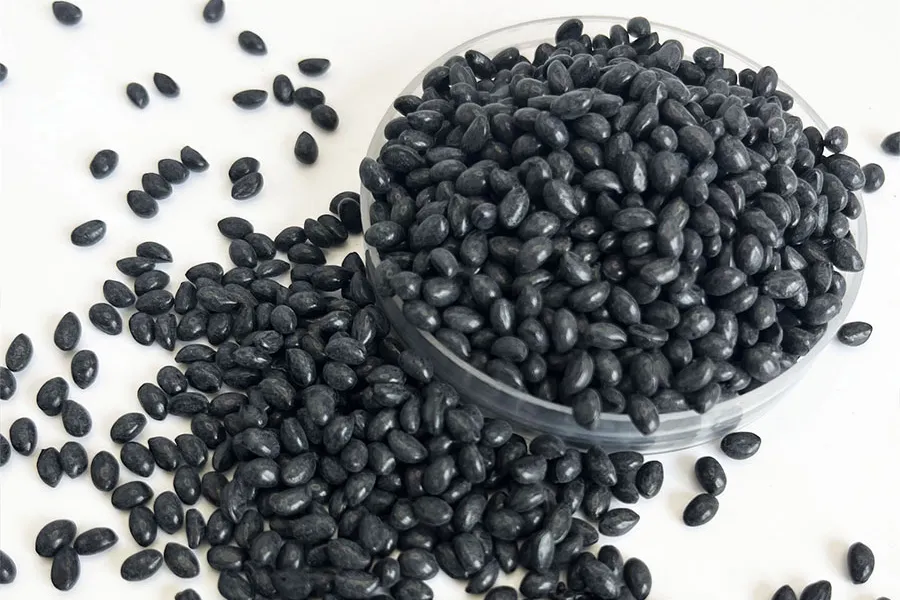
The real value of a masterbatch comes from its concentration. High-performance suppliers often offer pigment loadings of 50% to 75% for white and black products. But high loading only works if the dispersion is good. Buyers should ask for a Pressure Filter Test (DF Value) report. A low DF value shows that the pigments are finely dispersed, reducing the risk of clogging extruder screens and keeping production running smoothly.
4. Consistency Across Batches
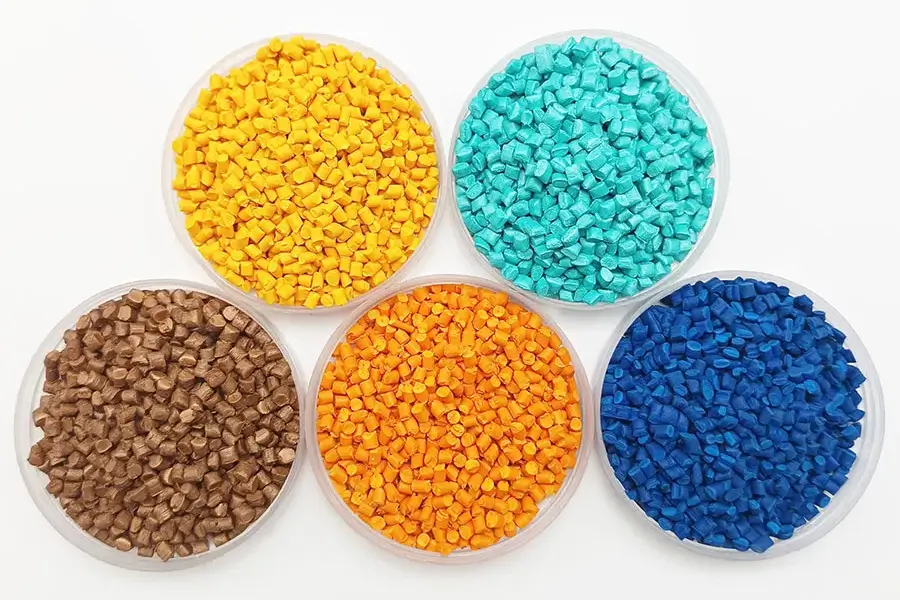
In B2B manufacturing, consistency defines quality. Leading masterbatch suppliers use spectrophotometers and automated dosing to keep color variation under ΔE < 1.0. Make sure to ask about their quality control procedures and whether they include a Certificate of Analysis with every shipment to ensure each batch is consistent.
5. Compliance with Global Standards (REACH, FDA, RoHS)
As regulations tighten in 2026, compliance is no longer optional. If you manufacture food packaging, medical devices, or electronics, your masterbatch supplier must be able to provide documentation showing compliance with FDA, EU 10/2011, REACH, or RoHS standards. A supplier who cannot provide these certificates puts your business at serious legal and financial risk.
6. Technical Support and On-Site Troubleshooting
The relationship with your masterbatch supplier shouldn’t stop at delivery. When issues like “melt fracture” or “silver streaks” appear on the production line, fast technical support is crucial. The best masterbatch suppliers provide on-site assistance or remote video consultations with polymer engineers. Their expertise in reviewing machine settings, including temperature profiles and screw speeds, can make a big difference in getting your additives to perform consistently in your facility.
7. Sustainability and PCR Compatibility
The sustainability requirements in 2026 mean manufacturers must include Post-Consumer Recycled (PCR) content in their products. PCR can be challenging to work with, as it often contains impurities that affect quality. Top masterbatch suppliers offer “PCR-ready” additives, such as odor scavengers, antioxidants, and desiccants, to stabilize recycled resins. Make sure your supplier has a “Green Portfolio” that helps you meet environmental goals while maintaining product performance.
8. Supply Chain Resilience and Lead Times
In today’s world of unpredictable global logistics, the location and reliability of your masterbatch supplier are critical. Look at how they source raw materials—do they have multiple suppliers for pigments and resins? How long do custom orders usually take? A supplier with a strong supply chain and strategically placed warehouses can help prevent production delays and costly downtime caused by shipping disruptions.

9. Price vs. Total Cost of Ownership (TCO)
Savvy buyers don’t focus only on the “price per kilogram.” They consider the total cost of ownership. A high-quality masterbatch from a reliable supplier may cost more upfront, but it often requires a lower dosage. For example, using 2% of a premium masterbatch instead of 4% of a commodity-grade product can reduce material costs. On top of that, fewer scrap rates and less machine downtime make the premium option more economical over time.
10. Financial Stability and Industry Reputation
Finally, it’s important to consider the experience and reputation of your masterbatch supplier. Look for companies that are financially stable and able to invest in the latest extrusion technology. Check their references within your specific field, whether it’s blown film, injection molding, or cable extrusion, to see how they have performed for other manufacturers. A supplier with more than five years in the industry is far more likely to provide the consistent reliability and tough, industrial-grade performance your production line depends on day after day.
Choosing the right masterbatch supplier can significantly impact your production efficiency. By looking at ten key factors, including R&D capability, carrier resin compatibility, total cost of ownership, and sustainability, you move beyond simply buying a product and create a true partnership. In 2026, the right additives are what turn raw plastic into reliable, high-value industrial products.