
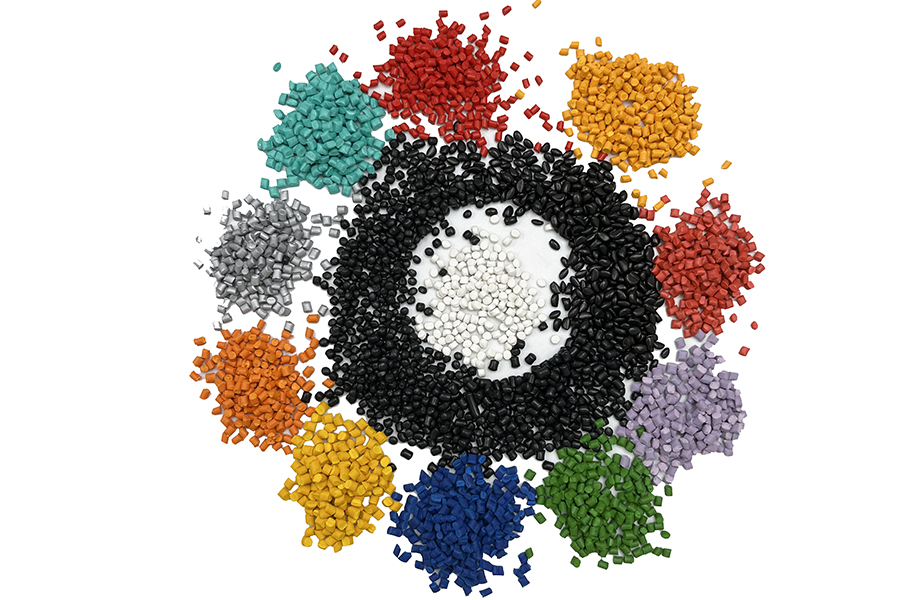
In the demanding world of polymer processing, the stability of your production line is only as reliable as your weakest additive. For manufacturers operating at the cutting edge of high-speed extrusion, multi-layer blown film, or precision injection molding, the choice of Plastic Masterbatch Suppliers is no longer a simple procurement task—it is a strategic decision that reverberates through every link of the global supply chain.
In recent years, the manufacturing environment has changed. What was once defined simply as a “supplier”, meaning products sold by vendors to provide raw materials, has now become a critical partner to and extension of your technical R&D and quality assurance operations. By focusing solely on the lowest “cost per kilogram” in the short term, you may be setting yourself up for future complications from an industrial perspective — such as clogged filtration packs, inconsistent color matching, and large-scale mechanical failures resulting in unscheduled downtime of several days.
To create a resilient and high-performing manufacturing operation, buyers need a more structured approach to evaluating suppliers. This article outlines the key benchmarks for assessing plastic masterbatch suppliers, helping ensure partnerships that deliver real return on investment and support ongoing innovation.
1. Technical Depth and Custom Formulation Agility
The first indicator of a top-tier partner among plastic masterbatch suppliers is their ability to move beyond standard, off-the-shelf catalogs. Industrial requirements are becoming hyper-specific. You may require a complex “combi-batch” that integrates anti-static properties with laser-marking capabilities, or perhaps a specialized UV stabilizer package tuned for the specific solar irradiance of a target geographic climate.
A strategic partner doesn’t just sell you a product; they engineer a solution. They should possess the agility to adjust the chemical “DNA” of the masterbatch to suit your unique machinery and resins.
The following table illustrates the difference between a commodity vendor and a strategic technical partner:
| Feature | Commodity Vendor | Strategic Plastic Masterbatch Suppliers |
| Formulation | Off-the-shelf / Standard | Custom-engineered for specific MFI/Resin |
| R&D Support | Limited or none | Full lab simulation and aging tests |
| Carrier Resin | Universal (One-size-fits-all) | Resin-specific (PE, PP, PET, ABS matching) |
| Technical Goal | Lowest price per kg | Lowest Total Cost of Production (TCO) |
2. Rigorous Quality Control and Inter-Batch Consistency

Consistency is the bedrock of a successful partnership. In the B2B polymer world, a “slight” color shift or a minor change in viscosity can lead to the rejection of an entire multi-ton shipment by a retail client. When auditing plastic masterbatch suppliers, you must demand a “closed-loop” quality control system.
The ideal supplier utilizes high-precision spectrophotometers to ensure that color tolerance remains within the strict ΔE < 1.0 threshold. Physical purity is also paramount. Top-tier suppliers perform a “Pressure Filter Test” on every single batch. This test ensures a low dispersion factor, guaranteeing that pigments are nano-dispersed and will not cause “specks,” “pinholes,” or screen-pack blinding in your extruder.
3. Carrier Resin Compatibility Expertise
Carrier resin mismatch. As a general rule of thumb, if your carrier resin doesn’t have identical or very similar MFI to your base polymer, then delamination, environmental stress cracking, and weakening of mechanical properties are almost guaranteed when your masterbatch isn’t successfully homogenous in your melt stream.
Professional plastic masterbatch suppliers will always aim for ‘like-for-like’ for their carrier systems and should ideally be able to demonstrate their knowledge of polymer rheology and prove that the masterbatch carrier dissipates seamlessly into the melt stream rather than acting as a contaminant.
4. Sustainability and Circular Economy Solutions
By 2026, the push for post-consumer recycled content has reached a fever pitch. However, PCR resin is notoriously difficult to process due to residual odors and moisture.
Leading plastic masterbatch suppliers are those who have mastered “restorative additives.” They offer specialized masterbatches:
- Desiccant Masterbatches: To absorb residual moisture in recycled flakes, preventing holes in the film.
- Odor Scavengers: Utilizing molecular sieves to neutralize the distinct “recycled scent.”
- Antioxidant Packages: To prevent the polymer from yellowing during its second or third heat cycle.
5. Technical Support and Troubleshooting

The true value of plastic masterbatch suppliers is rarely proven in the boardroom; it is proven on the factory floor. When a bubble breaks on a blown film line or a mold fails to fill, time is literally money.
A long-term partner provides “active troubleshooting.” This means having polymer engineers available to visit your site or provide remote real-time diagnostics to optimize your machine settings—such as temperature profiles and screw speeds. Their goal is to ensure the additive performs at peak efficiency within your specific environment.
6. Total Cost of Ownership Analysis
Competitive procurement teams focus on the TCO, not the quote (premium product priced by reputable plastic masterbatch suppliers; higher price quoted but lower “let-down ratio”):
ROI Calculation Example:
If 2% high-quality product = 4% of the commodity product re-pulling, then your “material cost” is already halved, and don’t forget the savings you will reap in storage, shipping, and scrap rates!
7. Long-Term Supplier Audit Checklist
Before finalizing your cooperation with plastic masterbatch suppliers, use this checklist for a final audit:
- Certifications: Does the supplier hold ISO 9001, FDA, REACH, and RoHS certifications?
- Capacity: Can they scale production to match your growth plan without compromising quality
- Transparency: Are they willing to share their raw material sourcing origins?
- Financials: Does the company show stable financial growth to invest in future R&D?
In conclusion, assessing plastic masterbatch suppliers is an exercise in both mitigating risk and creating value. When evaluating suppliers on their technical capability, consistency in batches, and innovation capacity, as opposed to simply their ability to meet pricing from another manufacturer, you are forming a partnership with a supplier who will directly contribute to your factory’s efficiency. In 2026’s manufacturing environment, masterbatch will be the “soul” of a plastic product—select those who support that fact with the proper precision.
Don’t risk using low-quality additives that can disrupt your production and damage your brand. Our engineering team develops high-performance masterbatch solutions built to perform in the toughest industrial conditions. Let’s collaborate to build a more efficient, high-yield production line that defines the future of your industry.