
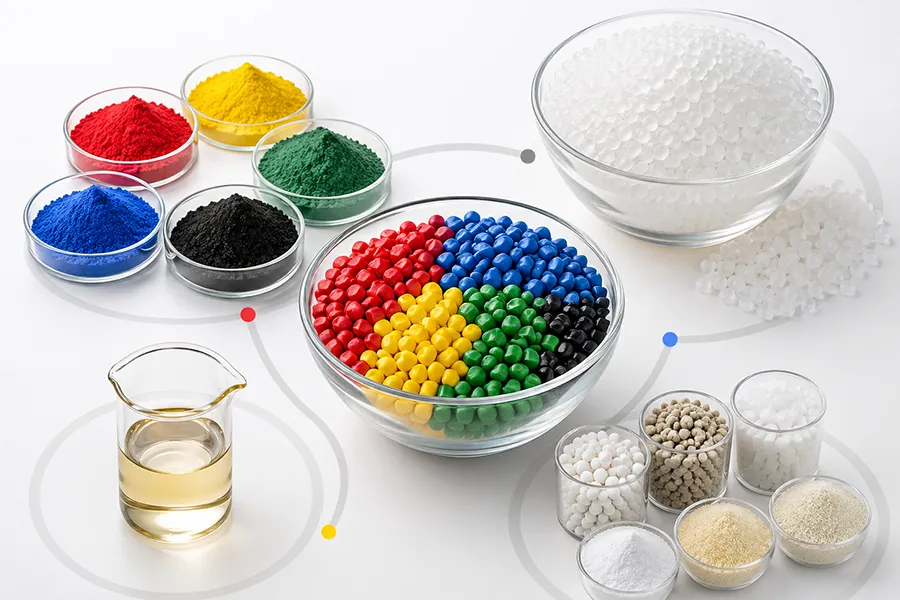
In the plastics manufacturing industry, masterbatch serves as a crucial raw material; it not only imparts rich colors to plastic products but also enhances their physical properties, thereby meeting diverse production requirements. With the continuous expansion of the plastic products market, the scope of application and functionality of masterbatch are constantly evolving. This article provides a comprehensive overview of the types, functions, and industrial applications of plastic masterbatch, aiming to help manufacturers gain a deeper understanding of this material’s characteristics and its practical role in the production process.
1. What is Plastic Masterbatch?
The manufacture of masterbatch constitutes an intermediate link situated downstream from synthetic resin production and upstream from the manufacturing of finished plastic products. It is produced by utilizing a synthetic resin as a carrier, incorporating a small amount of low-molecular-weight wax as a dispersant, and embedding a specific quantity of pigment. Following a typical plastic processing procedure, the result is a semi-finished plastic product—one that has neither been diluted to its final concentration nor processed into its final shape. It is precisely this form of a semi-finished product that offers immense convenience to the plastic processing, chemical fiber processing, and rubber processing industries.
2. The Functions of Plastic Masterbatch
First, the use of masterbatch creates a significantly cleaner working environment for downstream processing enterprises, effectively eliminating dust pollution and enabling “clean production.”
Second, it simplifies the production workflow for downstream companies; by adopting masterbatch technology, manufacturers can directly produce plastic, chemical fiber, and rubber products in a wide variety of colors.
This is particularly significant for the chemical fiber industry, where it facilitates a reduction in the discharge of colored spinning solutions—a practice of profound importance for environmental protection.
Furthermore, masterbatch technology has now evolved into “functional masterbatch technology.” By integrating with the polymer modification industry, it has established itself as a vital intermediate link within the industrial chain connecting synthetic resin production with the processing of finished products.
3. The Coloring Process and Role of Plastic Masterbatch
The coloring of raw materials—such as plastics and chemical fibers—is a process in which coloring agents are either highly dispersed within or dissolved into these materials, thereby imparting specific colors and unique optical properties to them. This process serves not only to aesthetically enhance products and boost their commercial value—often creating a distinct brand identity—but also to modify their functional performance (such as weather resistance, strength, and hardness). Moreover, it can endow products with specific specialized capabilities, such as promoting crop growth or providing electrical conductivity. Through the use of appropriate additives and suitable coloring methods, the functional performance of these materials can be effectively preserved and further enhanced.
4. Types of Plastic Masterbatches
Plastic masterbatches can be categorized into various types based on different requirements; the main classifications include:
4.1 Classification by Color
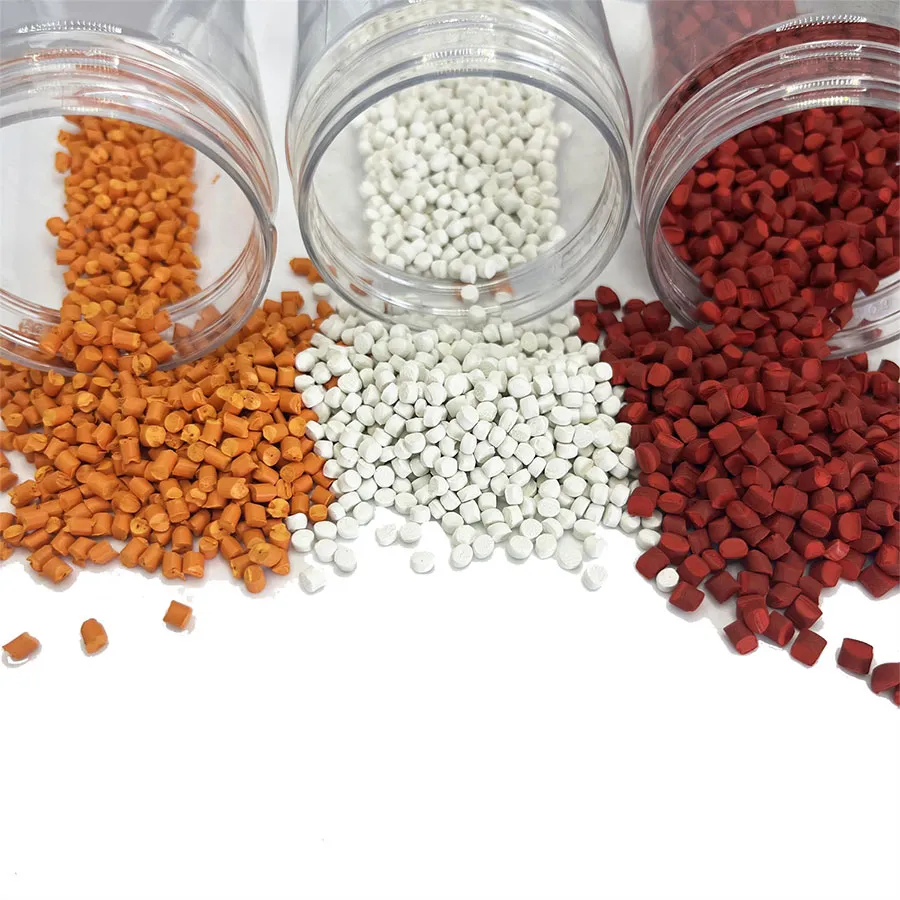
- Color Masterbatches: Widely used in a variety of plastic products, particularly consumer goods such as packaging, home appliances, and toys.
- Black Masterbatches: Typically utilize carbon black as the pigment; they possess excellent opacity and weather resistance, and are widely used in automotive components, piping, cable sheathing, and similar applications.
- White Masterbatches: Typically utilize titanium dioxide as the pigment; they offer high opacity and high whiteness, and are frequently used in home appliances, packaging films, cardboard boxes, and related products.
4.2 Classification by Function
- Standard Masterbatches: Used solely to provide basic coloration, without incorporating any additional functional properties.
- Functional Masterbatches: In addition to providing coloration, these plastic masterbatches incorporate additional functions—such as UV resistance, antioxidant properties, or antimicrobial effects—and are widely used in outdoor products or in applications with stringent environmental requirements.
- High-Performance Masterbatches: Characterized by superior weather resistance, heat resistance, and UV resistance; these are suitable for use in industrial products with demanding specifications.
4.3 Classification by Carrier Resin
Different types of resin carriers are utilized for different plastic materials; common examples include:
- PE Masterbatches: Suitable for polyethylene materials and widely used in applications such as films, piping, and tubing.
- PP Masterbatches: Suitable for polypropylene materials and frequently used in automotive interiors, home appliance housings, and similar components.
- PVC Masterbatches: Suitable for polyvinyl chloride materials and widely used in piping, windows and doors, flooring, and related products.
5. Industrial Applications of Plastic Color Masterbatches
5.1 The Packaging Industry
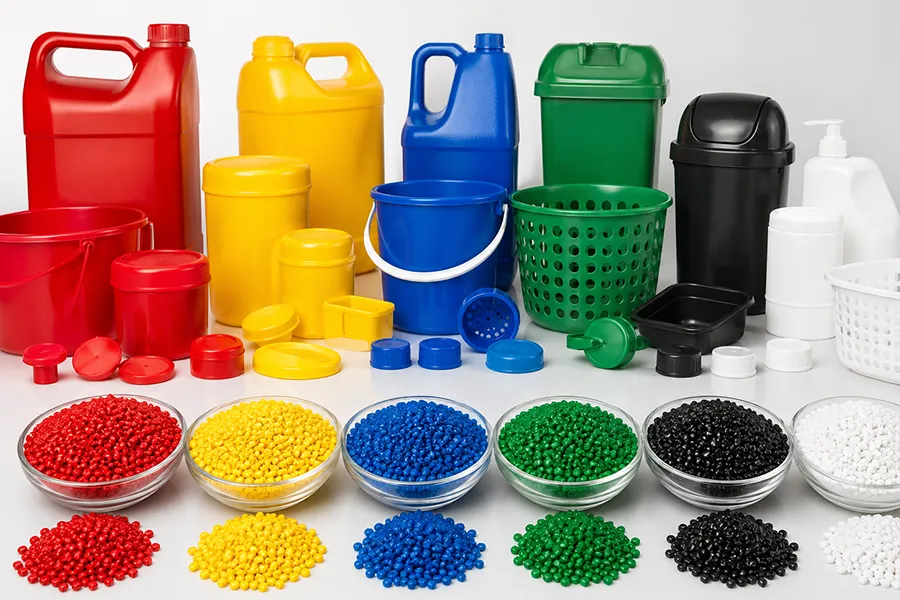
The packaging industry constitutes one of the primary application sectors for color masterbatches. Packaging products typically require color stability and smooth surface finishes, and color masterbatches play a crucial role in helping to achieve these standards. For instance, packaging films, bottle caps, boxes, and plastic bags all utilize color masterbatches to ensure color consistency and aesthetic appeal. Furthermore—beyond mere aesthetic requirements—these components often demand robust weather resistance, heat resistance, and UV resistance; color plastic masterbatches address these needs by incorporating functional additives designed to provide UV protection and thermal stability.
5.2 The Automotive Industry
In the automotive industry, color plastic masterbatches are primarily utilized in interior trim components, exterior trim components, instrument panels, bumpers, and similar parts. For these components, in addition to aesthetic requirements, there is also a demand for robust weather resistance, high-temperature resistance, and UV resistance. Masterbatches address these needs through the incorporation of functional additives specifically designed to provide UV protection and thermal stability.
5.3 Home Appliance Industry
Plastic components such as appliance housings, kitchen electronics, and air conditioner panels typically utilize high-performance masterbatches. The home appliance industry places stringent demands on both the aesthetics and structural integrity of plastic parts; masterbatches ensure color consistency in the final products while also imparting additional functional properties.
5.4 Construction Industry
Construction materials—including plastic pipes, profiles, sheets, and wall panels—often rely on masterbatches. Since these materials are frequently deployed in outdoor environments, the plastic masterbatches used must possess excellent weather resistance and UV resistance.
5.5 Toys and Consumer Goods Industry
Consumer products such as toys, stationery, and household items frequently employ masterbatches to achieve color diversity and enhance overall product aesthetics. Masterbatches not only facilitate a rich spectrum of colors but also help ensure the long-term durability and stability of the product’s coloration.
6. Advantages of Plastic Masterbatches in the Plastics Industry
The pivotal role of plastic masterbatches within the plastics industry is manifested in three key aspects:
6.1 Outstanding Coloring Performance
Coloring agents—classified by their physical form—generally fall into four main categories: powder, liquid, paste, and solid. A comparative analysis of the advantages and disadvantages of these four forms is presented below:
As the quintessential representative of solid-form coloring agents, masterbatches offer distinct advantages over other coloring materials. These include superior pigment dispersion, excellent coloring effects, simplification of downstream manufacturing processes, and a reduction in overall usage costs.
6.2 Critical to the Quality of Downstream Products as an Intermediate Material
Plastic masterbatches are typically incorporated into plastic products at a ratio ranging from 2% to 20%. Although the cost of masterbatches constitutes a relatively small fraction of the total production costs for downstream manufacturers, they exert a profound influence on both the aesthetic appeal and overall quality of the final plastic products. Given that plastic products are typically manufactured via large-scale, continuous production lines, any failure of the masterbatch to meet technical specifications—such as color consistency, dispersion quality, or migration resistance—can result in a downgrade of the entire batch’s quality grade, or even lead to total product rejection. Consequently, downstream customers place immense emphasis on the quality grade and consistency of the masterbatches they procure.
6.3 Avoid Environmental Pollution from Dust, Wastewater, etc., and Promote Clean Production Downstream
The use of color masterbatches generally leads to a reduction in pigment waste and minimizes the emission of pollutants—such as dust and wastewater—thereby safeguarding employee health. This practice aligns with national industrial policy directives as well as the prevailing industry trends toward green manufacturing and environmental protection. Color masterbatches exhibit excellent dispersibility; when introduced into the resin to be colored at a specific ratio, they effectively reduce pigment wastage. Furthermore, color masterbatches “lock” the pigment within a carrier resin, ensuring that no pigment dust is generated during the addition and mixing processes.
Conclusion
As an indispensable raw material in the plastics manufacturing process, color plastic masterbatches play a pivotal role in enhancing product aesthetics, improving performance, and optimizing processing operations. Gaining a comprehensive understanding of the various types of color masterbatches—including their specific functions and application scenarios—will enable plastics manufacturers to make more informed selections, thereby bolstering the market competitiveness of their products. If you have any related requirements or inquiries, we invite you to contact us!