
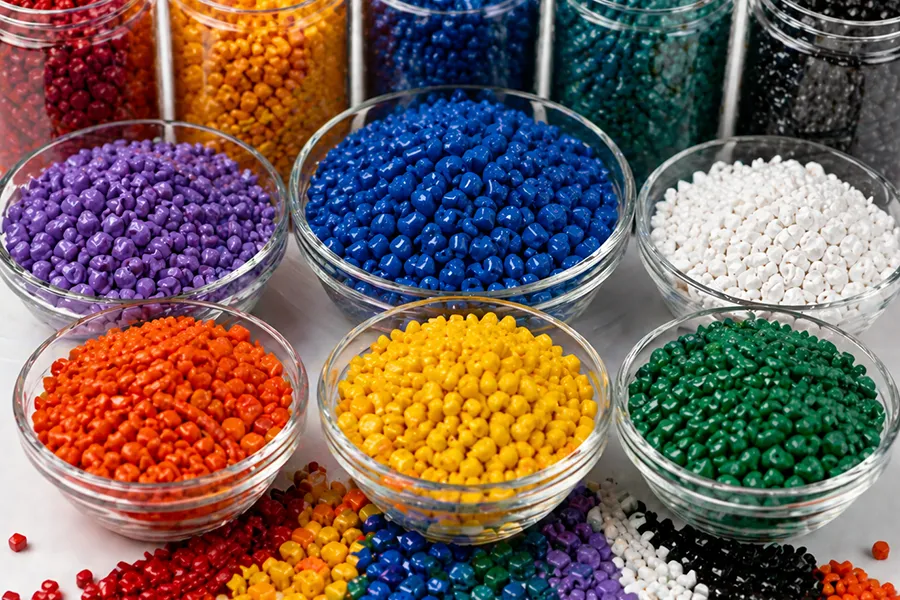
What is masterbatches? A color masterbatch is a novel type of specialized coloring agent for polymer materials, also known as a pigment preparation. Color masterbatches are primarily used in plastics. Composed of three fundamental elements—pigments (or dyes), a carrier, and additives—a masterbatch is an aggregate produced by uniformly dispersing a high concentration of pigment within a resin matrix. It can be described as a pigment concentrate; consequently, its coloring power is significantly higher than that of the raw pigment itself. During processing, a small amount of masterbatch is blended with uncolored resin to achieve a final colored resin or product with the desired pigment concentration.
1. The History of Masterbatch Development
Masterbatches were first developed through research conducted in several European countries during the 1960s. Research in this field began relatively late in my country, with initial studies commencing in the late 1970s in cities such as Beijing, Shanghai, and Tianjin. In recent years, the rapid growth of my country’s economy has driven the further expansion of the color masterbatch industry, leading to a steadily increasing demand for these products across a wide range of industrial sectors.
2. What Components Make Up a Masterbatch?
2.1 Pigments or Dyes
Pigments are broadly classified into organic pigments and inorganic pigments.
Commonly used organic pigments include: Phthalocyanine Red, Phthalocyanine Blue, Phthalocyanine Green, Fast Red, Macromolecular Red, Macromolecular Yellow, Permanent Yellow, Permanent Violet, Azo Red, etc. Commonly used inorganic pigments include: Cadmium Red, Cadmium Yellow, Titanium Dioxide, Carbon Black, Iron Oxide Red, Iron Oxide Yellow, etc.
2.2 Carrier
The carrier serves as the matrix (base material) for the color masterbatch. For specialized masterbatches, the resin chosen as the carrier is typically the same type as the resin used in the final product; this ensures optimal compatibility between the two materials, though the flow properties (fluidity) of the carrier must also be taken into consideration.
2.3 Dispersant
Dispersants facilitate the uniform distribution of pigments and prevent them from re-aggregating. An effective dispersant should have a melting point lower than that of the carrier resin, exhibit good compatibility with the resin, and possess a strong affinity for the pigment particles. The most commonly used dispersants are low-molecular-weight polyethylene waxes and stearates.
2.4 Additives
These include various functional agents such as flame retardants, brightening agents, antimicrobial agents, antistatic agents, and antioxidants. Unless specifically requested by the client, color masterbatches typically do not contain these types of additives.
3. What Are the Main Types of Masterbatches?
3.1 General-Purpose Masterbatches
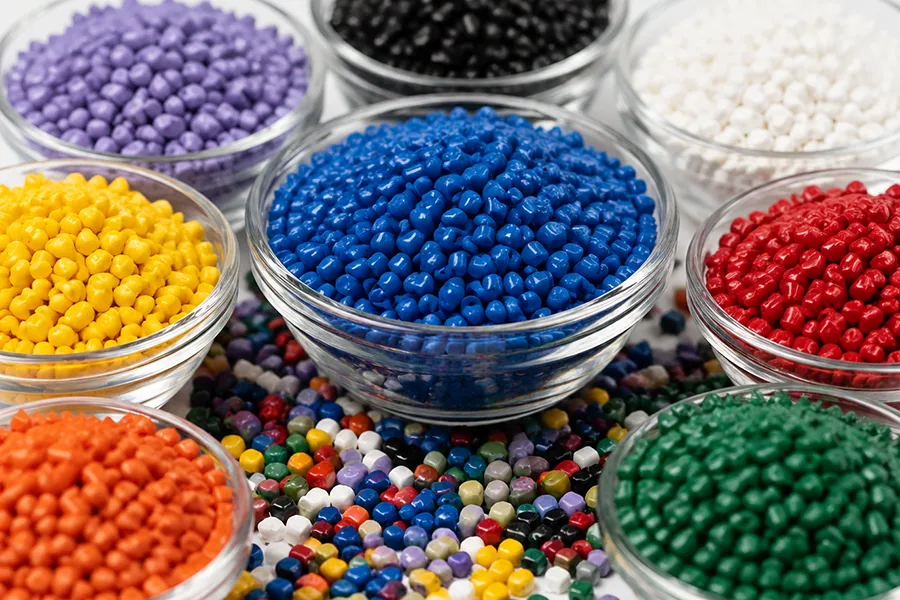
General-purpose masterbatches serve as the foundational choice in plastic coloring and are suitable for most common plastic materials. Typically composed of a carrier resin, pigments, and dispersants, these masterbatches offer excellent compatibility and stability. Common carrier resins include polyethylene (PE) and polypropylene (PP), which are capable of meeting the coloring requirements for everyday plastic products. Examples include black masterbatch, white masterbatch, blue masterbatch, and so on.
General-purpose masterbatches are relatively low in cost, making them ideal for use in large-scale production.
3.2 Functional Masterbatches
In addition to providing basic coloring, functional masterbatches possess specialized properties. Examples include:
- Weather-Resistant: Contains UV absorbers, making it suitable for outdoor products.
- Moisture-Absorbing: Desiccant masterbatches can be used to absorb moisture and humidity present in plastic raw materials.
- Flame-Retardant: Contains flame-retardant components, used for electronic and electrical appliance housings.
- Anti-Static: Reduces surface charge accumulation, suitable for the packaging of precision instruments.
- Although these masterbatches entail higher costs, they endow plastic products with significant added practical value.
3.3 Specialized Masterbatches
Specialized masterbatches are designed for specific materials and processing techniques, such as:
- Food-Grade: Complies with hygiene standards, used for tableware and food packaging.
- High-Transparency: Preserves the transparency of the base material, suitable for transparent products.
- High-Temperature: Withstands high-temperature processing environments, used for engineering plastics.
3.4 Classification by Processing Method
Different plastic processing methods impose varying requirements on a masterbatch’s melt flow properties, dispersibility, thermal stability, and addition ratio. Common applications include:
- Injection Molding Masterbatches
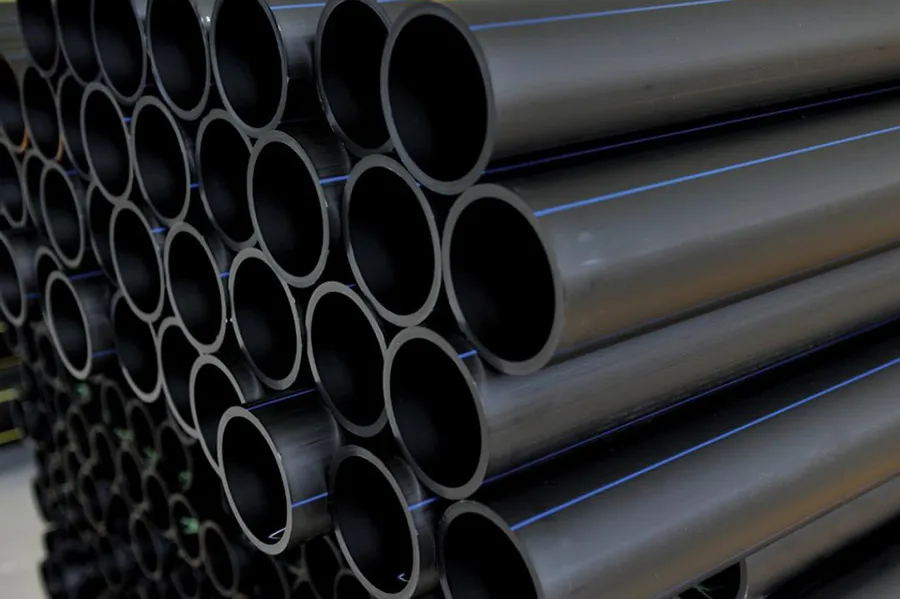
- Pipe/Profile Extrusion Masterbatches
- Blown Film Masterbatches
- Sheet/Thermoforming Masterbatches
- Blow Molding Masterbatches
- Fiber/Non-Woven Fabric Masterbatches
Selecting a specialized masterbatch requires careful consideration of the end product’s intended usage environment and performance requirements.
4. Why Do Plastic Manufacturers Need to Use Masterbatches?
4.1 To ensure superior pigment dispersion within the finished product
During the masterbatch manufacturing process, pigments undergo a refinement treatment specifically designed to enhance their dispersibility and coloring strength. The carrier material in a specialized masterbatch is identical to the specific type of plastic used in the final product, ensuring excellent compatibility. Upon heating and melting, the pigment particles disperse thoroughly and uniformly throughout the plastic matrix of the finished article.
4.2 Maintain the chemical stability of the pigments
If raw pigments are used directly, they are exposed to air during storage and processing, making them susceptible to moisture absorption, oxidation, and other degradation phenomena. However, when formulated into a masterbatch, the resin carrier acts as a barrier, isolating the pigments from air and moisture, thereby preserving their quality over extended periods.
4.3 It ensures color consistency in the finished products.
Since masterbatch granules are similar in size and shape to the resin granules, they allow for more convenient and precise metering. During mixing, they do not adhere to the walls of the mixing vessel and blend more uniformly with the resin. Consequently, this guarantees a consistent additive ratio, thereby ensuring consistent coloration in the final products.
4.4 It safeguards the health of operators
Raw pigments are typically in powder form and tend to become airborne during addition and mixing; if inhaled, they can pose health risks to the operators. Masterbatches, conversely, are granular in form and do not generate dust during processing.
5. In Which Industries Are Masterbatches Widely Used?
5.1 The Plastics Industry — Plastic Colorants
Plastic products are ubiquitous in our daily lives—ranging from appliance housings and toys to packaging materials. As plastic colorants, masterbatches infuse these products with a rich and vibrant spectrum of colors. The use of masterbatches for coloring not only delivers vivid hues and excellent color stability but also enhances the added value and market competitiveness of plastic products.
5.2 The Rubber Industry
Rubber products find extensive application in sectors such as automotive manufacturing, tire production, and footwear materials. Within the rubber industry, masterbatches provide a diverse array of color options for rubber products. Furthermore, masterbatches can improve the processing characteristics and physical properties of rubber products, thereby enhancing their overall quality and durability.
5.3 The Chemical Fiber Industry
Chemical fiber products—such as synthetic fibers like polyester, nylon, and polypropylene—occupy a pivotal position within the textile sector. As specialized colorants for chemical fibers, masterbatches enable uniform coloration of the fibers and facilitate efficient, large-scale batch production. Using color masterbatches for coloring not only results in vibrant colors and excellent color fastness but also enhances the washability and light fastness of chemical fiber products.
6. Why Choose Nuoxin as Your Color Masterbatch Manufacturer?
The production of plastic products is inseparable from color masterbatches—much like painting is inseparable from pigments.
The color masterbatches produced by Nuoxin feature brilliant hues, strong tinting strength, superior dispersibility, and excellent compatibility. They are widely utilized in food-contact-grade packaging products—such as masterbatches for beverage bottles and caps, pharmaceutical bottles, and blister packaging for mooncakes—as well as in home appliances (e.g., rice cookers and humidifiers). Additionally, they are used in various other packaging products that do not require food-contact certification, such as containers for dishwashing liquid, pump heads, and packaging for shampoos and body washes.
7. How to Select the Right Color Masterbatch?
For plastic manufacturers, selecting a color masterbatch involves more than just looking at the color itself; it requires a comprehensive assessment that takes into account the base material, processing method, and final application.
7.1 Identify the Base Resin Type
First, it is essential to determine which resin is being used—whether it is PE, PP, ABS, PS, PET, PVC, or another type. The better the compatibility between the masterbatch carrier and the base resin, the more stable the production process will be, and the higher the quality of the finished product.
7.2 Define the Processing Method
Different processing methods impose different performance requirements on color masterbatches. For example:
- Injection Molding: Focuses on melt flowability, heat resistance, and surface finish.
- Film Blowing: Focuses on dispersibility, film thickness uniformity, and the control of “crystal points” (unmelted particles).
- Extrusion: Focuses on the stability of continuous production and color consistency.
- Blow Molding: Focuses on melt strength, dispersion effectiveness, and the visual appearance of the bottle/container.
7.3 Confirm Color Standards
Clients may provide physical samples, color cards, Pantone color codes, or RAL color codes. For export products or orders from brand-name clients, it is highly recommended to produce and verify samples to ensure the final color precisely matches the client’s standards.
7.4 Consider the Addition Ratio
The typical addition ratio for color masterbatches ranges from 1% to 5%. The specific ratio depends on factors such as pigment concentration, the desired color depth, the thickness of the finished product, and the required opacity (covering power). An addition ratio that is too low may result in insufficient color intensity, while a ratio that is too high could negatively impact the material’s physical properties and increase production costs.
Summary
As the plastics industry evolves toward high performance, eco-friendliness, and customization, Nuoxin Masterbatch continues to undergo continuous upgrades.
For plastics manufacturers, masterbatches are no longer merely simple coloring agents; rather, they serve as essential material solutions for enhancing the quality, production efficiency, and brand value of plastic products.