
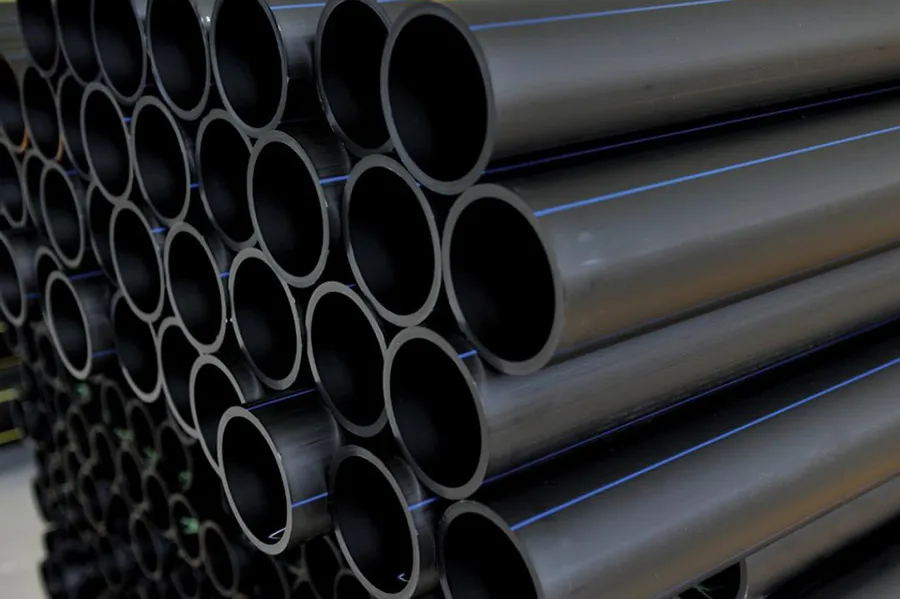
In water supply, gas distribution, and other municipal infrastructure systems, black piping materials are the predominant choice. Black masterbatches play a pivotal role in these applications. For customers, however, correctly selecting the appropriate black masterbatch for pipe remains a critical and often challenging task.
1. Clarifying Application Standards and Usage Scenarios
Different piping standards impose varying requirements on black masterbatches; therefore, these factors must be confirmed prior to requesting a quotation:
- Application Type: Water supply pipes (PE100/PE80), gas pipes, cable sheathing, drainage pipes.
- Applicable Standards: e.g., ISO 4427, EN 12201, GB/T 13663, etc.
- Operating Environment: Whether involving long-term outdoor exposure (UV intensity) or contact with chemical media.
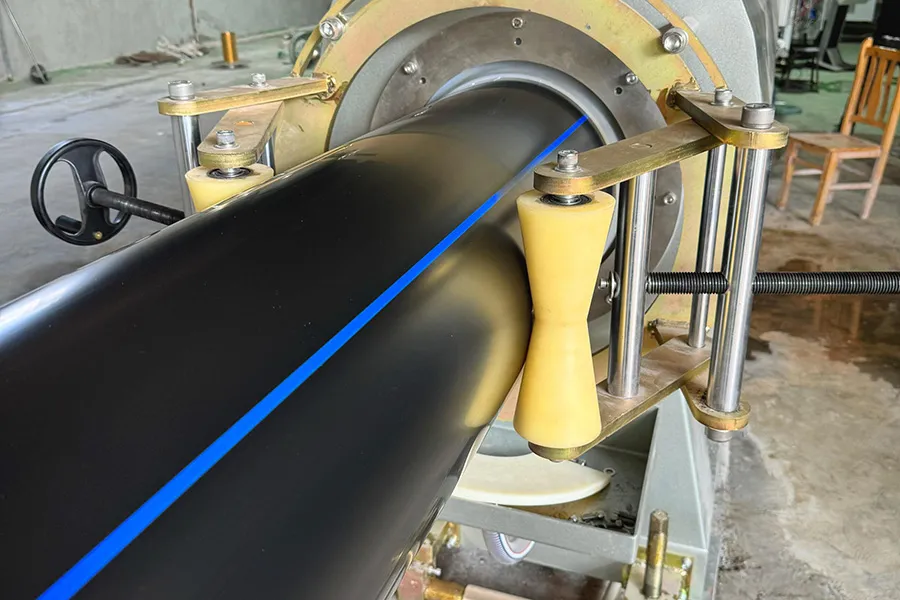
- Processing Method: Single-screw or twin-screw extrusion; specific requirements regarding line speed and production capacity.
2. Carrier Compatibility: The Cornerstone
The carrier serves as the matrix of the masterbatch; fundamentally, it must exhibit excellent compatibility with the base resin you intend to color.
If the carrier is mismatched, it can lead to uneven pigment dispersion, resulting in color streaks or specks within the finished product. More critically, it can severely compromise the pipe mechanical properties—such as toughness and tensile strength. For instance, when coloring HDPE pipes, priority should be given to black masterbatches utilizing an HDPE carrier; conversely, for LDPE-based systems, an LDPE carrier should be selected.
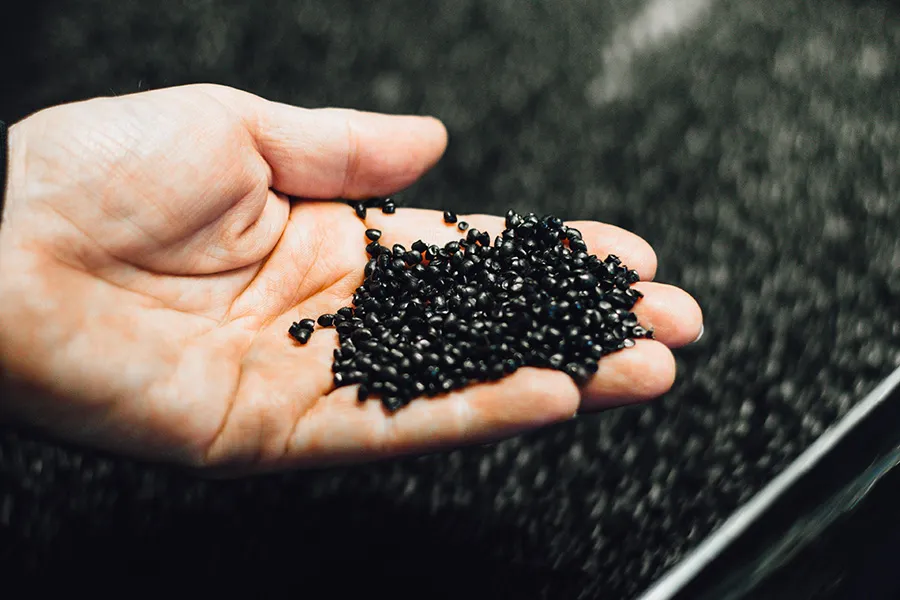
3. Carbon Black: Defining the Essence of Color
Carbon black is the source of the black masterbatch coloration, and its quality directly determines the final aesthetic outcome.
3.1 Particle Size and Blackness
Generally, the smaller the carbon black particle size, the higher the degree of blackness and the stronger the tinting strength; however, this also imposes stricter requirements on the dispersion process. For example, ultra-fine carbon black with a particle size of 14–16 nm can achieve an exceptionally deep black finish, whereas carbon black with a particle size exceeding 20 nm is easier to disperse and is suitable for general-purpose applications where extreme blackness is not a critical requirement.
3.2 pH Value and Purity
Attention must also be paid to the carbon black’s acidity/alkalinity (pH value) and impurity levels (e.g., heavy metals)—particularly in sectors with stringent environmental and safety regulations, such as food-contact materials and electronic/electrical appliances.
4. Functional Additives: Influencing Performance and Safety
To facilitate the dispersion of carbon black and to fulfill specific functional requirements, various additives are incorporated into the masterbatch formulation. Dispersants: Mainstream dispersants include EBS, PE wax, and similar additives.
It is important to note that certain dispersants may bloom (migrate to the surface) under high temperatures or in specific chemical environments. This can negatively impact the surface properties of the finished product—such as its suitability for painting or electroplating—or lead to odor issues. For applications with stringent requirements, consider utilizing “wax-free” formulations or masterbatches with a “low dispersant content.”
Functional Additives: Depending on the intended end-use, black masterbatch for pipe applications can also be formulated to incorporate various additional functions, such as UV resistance, flame retardancy, and anti-static properties.
5. How Should One Select a Black Masterbatch?
- Dispersibility is the most critical property of a black masterbatch; a product that possesses high blackness but lacks adequate dispersion will result in visible defects in the finished goods.
- Compatibility with the base resin is essential; using a masterbatch formulated for one type of base material in an incompatible plastic matrix can lead to delamination or peeling of the finished product.
- The formulation’s addition ratio must be appropriate; when added at the specified ratio during processing, the resulting product should consistently achieve the intended color design.
- Ensure uniform mixing with the base resin; ideally, select a masterbatch with a granule size that closely matches that of the base resin to prevent issues related to uneven color distribution.
- Processing temperatures should be maintained at a constant level; temperature fluctuations can compromise the plasticization efficiency of the masterbatch, thereby negatively affecting the surface smoothness and shrinkage ratio of the finished product.
- Select a supplier that is qualified, reputable, quality-conscious, possesses robust quality control capabilities, and demonstrates strong R&D and development expertise.
6. A Practical Guide to Purchasing Black Masterbatches
Once the theoretical concepts are clearly understood, you may follow the path outlined below to guide your actual selection process:
6.1 Clarify Your Specific Requirements
This is the first—and most critical—step. You must clearly define the following parameters: What is my base resin (e.g., PP, ABS, PC)? What is the intended application field for the finished product (e.g., food packaging, automotive components, outdoor construction materials)? What level of surface gloss is required (high-gloss or matte)? Will the product undergo any subsequent secondary processing (e.g., painting or coating)? What specific requirements exist regarding mechanical properties? Finally, what is the allocated budget range?
6.2 Communicate Effectively with Suppliers
Approaching suppliers with a clearly defined set of requirements allows you to gather information in a more targeted and efficient manner. You may proactively inquire:
“I need to color PP automotive components requiring a high-gloss finish; do you have a compatible carrier system and a suitable grade?”
“Does this black masterbatch hold relevant certifications, such as RoHS or FDA?”
“What is the recommended addition level to ensure the desired degree of blackness? Can you provide a Technical Data Sheet (TDS)?”
6.3 Insist on Sample Testing
Before committing to a bulk purchase, be sure to request samples for on-line testing. This is the only reliable method to verify whether the masterbatch is truly compatible with your specific product system. Testing should simulate actual production conditions and focus on evaluating color uniformity, the impact on mechanical properties, and surface appearance.
Summary
Black masterbatch for pipe applications serve as far more than just a “source of color”; they are critical materials that safeguard structural integrity and weather resistance.
Purchasing decisions should not be based solely on price and carbon black content; rather, they require a systematic evaluation centered on dispersibility, compatibility, stability, and long-term performance. For any related inquiries or requirements, please feel free to consult Nuoxin Masterbatch Manufacturer.