

For Nuoxin, the market has changed in a practical way: masterbatch is no longer judged only by shade cards, price, or a basic sample. Buyers now compare suppliers on regulatory readiness, recycled-resin compatibility, processing stability, and delivery confidence. That shift explains why masterbatch industry trends matter so much in 2026. The companies that track masterbatch industry trends early can reduce trial failures, shorten approval cycles, and protect margins when material conditions change.
Why masterbatch industry trends have shifted from price to risk management
One of the clearest masterbatch industry trends is compliance-led sourcing. In packaging, consumer goods, and export-oriented production, purchasing teams want to know whether pigments, carriers, and additives fit the rules of the destination market before they ask for discounts. Documentation, test support, and formulation traceability now influence buying decisions because a missed requirement can delay shipments, trigger reformulation, or force a supplier change at the worst possible moment.
That pressure is intensifying in Europe. The European Commission says the Packaging and Packaging Waste Regulation entered into force on 11 February 2025 and generally applies from 12 August 2026. In parallel, the FDA states that color additives used in regulated products are subject to approval requirements before use. For buyers, that means the best supplier is often the one that can explain not just what is in the pellet, but why the formulation, declarations, and technical file will stand up to scrutiny.
| Indicator | Current signal | Why it matters |
| Global plastics production | 430.9 Mt in 2024 | Demand remains large, but competition is shifting toward performance, compliance, and supply reliability. |
| Europe share of global production | 12% in 2024 | Regional competitiveness pressure increases the value of smarter sourcing and dependable suppliers. |
| Circular plastics in European production | 15.4% in 2024 | Recycled-content growth is real, but technical variability is still a major operating issue. |
| EU packaging regulation | PPWR in force 11 Feb 2025; general application 12 Aug 2026 | Packaging-related masterbatch decisions increasingly need stronger documentation and recyclability awareness. |
| CHINAPLAS 2026 scale | 390,000+ sqm; 4,600+ exhibitors; 320,000 expected visitors | The market continues to invest heavily in materials innovation, processing efficiency, and sustainability. |
| Nuoxin operating signal | 10+ years of production/R&D experience; 15 production lines highlighted online | Buyers are increasingly looking for evidence of capacity, response speed, and development support. |
Masterbatch industry trends in cost control and formulation efficiency
A second shift in masterbatch industry trends is the move from price-only sourcing to total-cost sourcing. Resin volatility has not disappeared, and converters are under pressure to hold output quality while reducing scrap, rework, and excessive virgin-resin use. In this environment, formulation efficiency matters more than headline price. A filler system that runs cleanly, disperses well, and supports stable processing can deliver a better commercial result than a cheaper product that introduces downtime or inconsistency.
This is where Nuoxin’s product structure aligns with buyer priorities. Its color masterbatch range supports shade control, branding, and appearance consistency, while its filler masterbatch
portfolio speaks directly to cost engineering in suitable applications. For many processors, the conversation is no longer “What is the lowest price per kilogram?” but “What blend gives me the lowest risk-adjusted production cost?” That question is becoming central to masterbatch industry trends across film, injection molding, extrusion, and packaging.
Masterbatch industry trends in recycled-content processing
Recycled-content processing is another area where masterbatch industry trends are becoming more technical. Recycled resin can vary more than prime resin in moisture, contamination, odor, and melt behavior. As recycled content increases, the masterbatch has to do more work: maintain color stability, support dispersion, reduce visual defects, and help the line run consistently from batch to batch. This is why processors increasingly value additives that solve real production problems instead of merely meeting a quotation.
Nuoxin’s desiccant masterbatch offer is relevant here because moisture management is still a major cause of bubbles, streaks, pinholes, and unstable output in many recycled-material workflows. When buyers evaluate suppliers, they now look for application guidance on dosage, carrier compatibility, and actual processing conditions. In that sense, masterbatch industry trends are rewarding companies that can connect product claims to line performance, not just catalog language.
Product visuals aligned with current buying priorities
 |  | 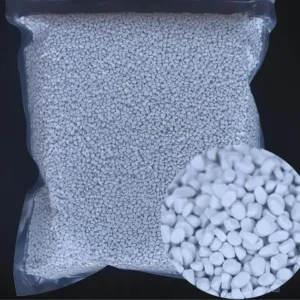 |
| Color masterbatch pellets for branding, shade control, and appearance consistency. | Filler masterbatch pellets for cost engineering and resin-optimization discussions. | Desiccant masterbatch pellets for moisture control in recycled-material processing. |
| View color masterbatch | View filler masterbatch | View desiccant masterbatch |
Masterbatch industry trends in supply security and development speed
Supply reliability has returned as one of the most important masterbatch industry trends for international buyers. A low quote has limited value if lead times move unexpectedly, communication is slow, or repeat orders do not match the approved sample. Buyers are therefore paying more attention to whether a supplier can support consistent quality, fast feedback, and shorter development cycles.
Nuoxin’s current positioning supports that expectation. On its website, the company describes itself as an integrated manufacturing-and-trade enterprise with more than ten years of production and R&D experience, and its product pages highlight one-stop purchasing and 15 production lines. Those signals matter because modern buyers want evidence of capacity, not only broad claims. Faster sampling, clearer technical feedback, and smoother project follow-up are all becoming part of supplier selection. That is one reason masterbatch industry trends are favoring manufacturers that combine product breadth with consultative service.
What masterbatch industry trends mean for buyers and manufacturers in 2026
The broader plastics market reinforces the direction of travel. Plastics Europe reports that global plastics production reached 430.9 million tonnes in 2024, while Europe’s share fell to 12%. The same report says circular plastics represented 15.4% of European production in 2024, showing progress but also confirming that the transition is uneven. Meanwhile, CHINAPLAS 2026 is projected to cover more than 390,000 square meters with 4,600-plus exhibitors and 320,000 expected trade visitors, underlining how strongly the market is still investing in new materials, process efficiency, and sustainability.
For buyers, the practical lesson is straightforward: qualify suppliers on documentation, process support, and repeatability, not only on initial price. For manufacturers, the lesson is equally clear: explain how your formulation performs under real production conditions and how your service model reduces risk after the first order. That is the commercial core of masterbatch industry trends today.
Conclusion
The market is moving away from simple pellet selling and toward lower-risk production outcomes. The suppliers that win will be the ones that support compliance, reduce total production cost, improve recycled-material processing, and respond quickly when converters need customization. For Nuoxin, that makes masterbatch industry trends more than a topic for content marketing. They are a practical framework for how the company should present its products, technical support, and reliability to buyers who are choosing partners more carefully than before.