
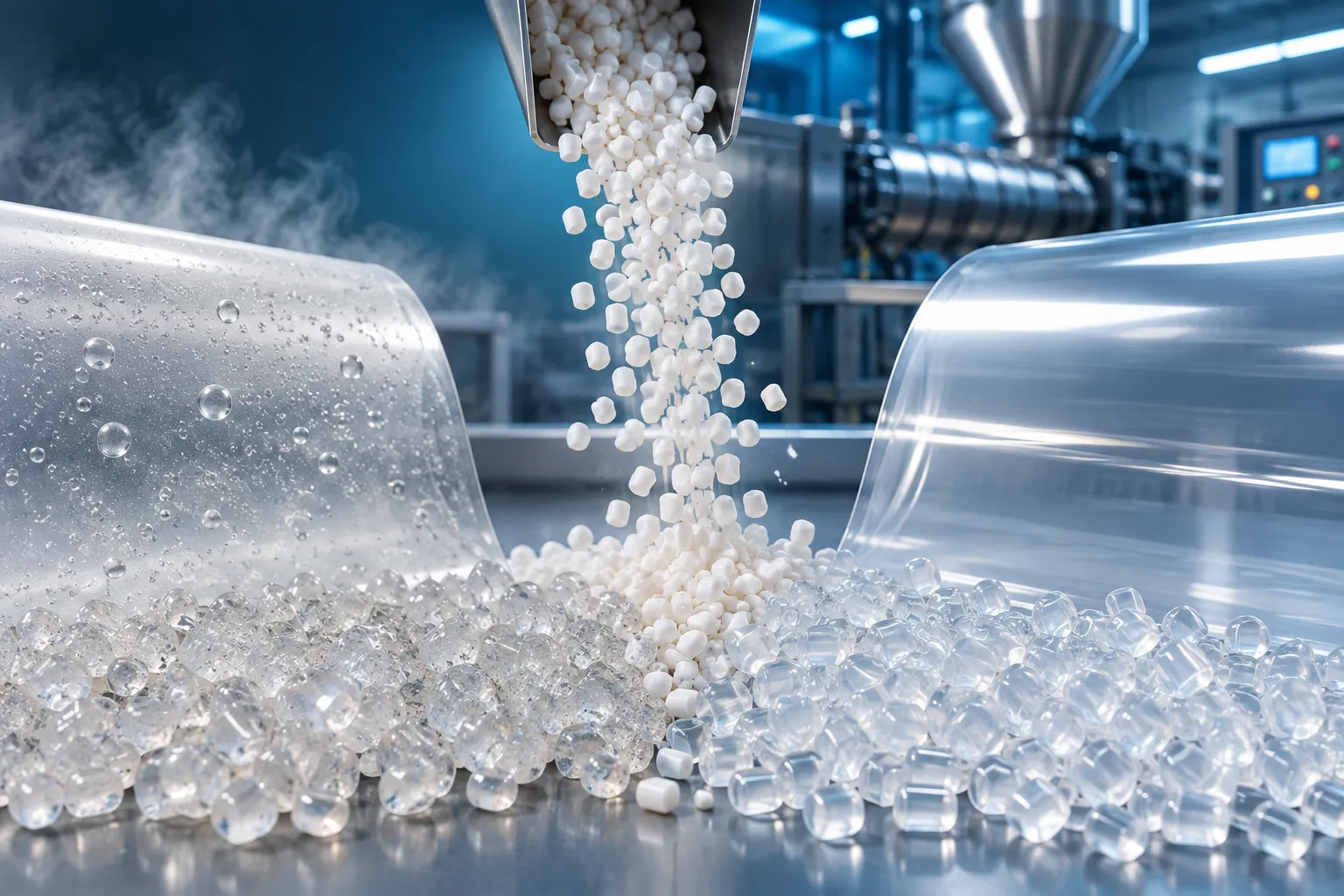
Moisture is a common challenge in plastic manufacturing, especially when recycled resins, fillers, or improperly stored raw materials are used. Even a small amount of moisture can cause bubbles, silver streaks, clouding, cracks, rough surfaces, and unstable production.
Desiccant master batch provides manufacturers with a practical solution. By absorbing moisture during processing, it helps improve product appearance, stabilize production, and reduce the need for pre-drying plastic materials.
Why Does Moisture Cause Problems in Plastics?
Plastic raw materials can absorb moisture during transportation, storage, and recycling. Moisture may also be introduced through mineral fillers, pigments, and other additives.
When damp material enters a high-temperature extruder or injection molding machine, the moisture turns into vapor. If the vapor cannot escape from the molten plastic, it can cause:
- Bubbles and voids
- Silver streaks and surface spots
- Clouding or reduced transparency
- Cracks and poor surface finish
- Unstable extrusion or molding
- Reduced product consistency
- Increased scrap rates
Traditional drying equipment can remove moisture before production, but it requires additional time, energy, equipment, and labor. Desiccant master batch offers a simpler alternative for many plastic-processing applications.
How Does Desiccant Master Batch Work?
Desiccant master batch contains moisture-absorbing ingredients dispersed in a compatible carrier resin. After being mixed with the plastic raw material, it absorbs moisture and certain low-molecular-weight substances during processing.
This helps prevent moisture from turning into vapor and forming defects inside or on the surface of the finished product. The master batch can be added directly to the production mixture without significantly changing the original processing procedure.
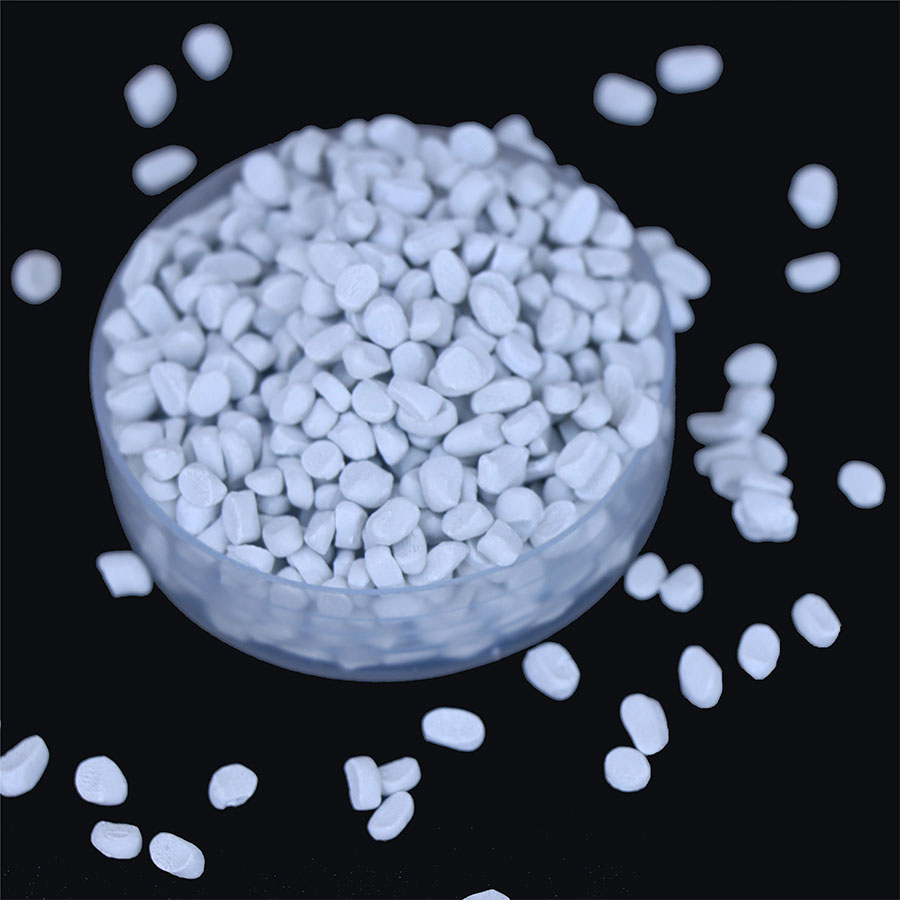
Detailed Product Introduction
Defoaming masterbatch is an additive used in plastic processing. Below is a detailed introduction to the product:
I. Basic Concept
Also known as moisture-absorbing masterbatch, plastic defoamer, plastic desiccant, or moisture-removal masterbatch, this product is primarily used to absorb moisture and unidentified low-molecular-weight substances during processing. It minimizes or eliminates the formation of bubbles in molten plastic caused by factors such as temperature fluctuations, pressure variations, or moisture in the raw materials.
II. Product Features
Stabilizes Molding Processes: It stabilizes the plastic molding process, ensuring the product’s visual quality and performance.
Good Dispersion: It disperses well and distributes evenly within the plastic, without adversely affecting the product’s mechanical properties.
High Safety: It is non-toxic, odorless, non-corrosive, and harmless to humans.
III. Application Areas
Defoaming masterbatch is widely used in the production of plastic items such as films, bags, sheets, and injection-molded parts. It is particularly effective in applications involving PE (polyethylene), PP (polypropylene), and ABS plastics—including piping, blown film, injection molding, and extrusion. It also yields excellent results when processing recycled plastics.
IV. Usage Instructions
To use, simply mix the masterbatch thoroughly with the moisture-laden plastic raw material before proceeding with production. The specific addition ratio depends on the moisture content of the plastic. For example, in blown film production, the addition ratio is typically 1.0%–4.0%; for sheet and injection molding production, it ranges from 2% to 5%.
V. Functions and Advantages
Improves Product Quality: It effectively eliminates issues such as bubbles, clouding, cracks, and spots, thereby enhancing the product’s appearance and performance.
Reduces Production Costs: Using defoaming masterbatch eliminates the need for lengthy heating and drying steps, thereby lowering production costs.
Increases Production Efficiency: It is easy to use and requires no adjustments to the existing production process; it saves time and energy, leading to higher production efficiency. Summary
In summary, defoaming masterbatch plays a pivotal role in the plastic processing industry and is an indispensable additive for manufacturers of plastic products.
Key Benefits for Plastic Manufacturers
Improved Use of Recycled Plastics
Recycled plastic materials often contain more moisture than virgin resins because of washing, storage, and environmental exposure. Desiccant master batch can help manufacturers process recycled materials more consistently and reduce defects associated with residual moisture.
Less Dependence on Pre-Drying
Depending on the resin, moisture level, and product requirements, the use of desiccant master batch may reduce the time and energy required for pre-drying. This can simplify production preparation and improve overall efficiency.
More Stable Product Appearance
By controlling moisture-related defects, manufacturers can achieve smoother surfaces, more consistent color, fewer bubbles, and better visual quality. This is particularly valuable in film blowing, extrusion, and injection molding.
Lower Scrap and Processing Costs
Fewer bubbles, cracks, spots, and unstable batches mean less rejected material. The product can also help reduce energy consumption and labor associated with lengthy drying procedures.
How to Use Desiccant Master Batch Correctly
For better results, the master batch should be mixed evenly with the plastic resin before processing. Manufacturers should consider the following factors when determining the addition ratio:
- Moisture level of the raw material
- Type of plastic resin
- Percentage of recycled material
- Processing method
- Product thickness and quality requirements
- Storage conditions of the raw materials
A small-scale production test is recommended before mass production. If the material contains excessive moisture, the addition ratio may need to be adjusted or combined with appropriate pre-drying.
The package should be resealed immediately after opening because the master batch begins absorbing moisture when exposed to air. It should be stored in a cool, dry environment and protected from rain, humidity, and direct sunlight.
Common Applications
Desiccant master batch can be used in various plastic products, including:
- Blown plastic films
- Shopping and garbage bags
- Plastic sheets
- Pipes and profiles
- Injection-molded products
- Extruded plastic components
- Recycled PE and PP products
- ABS plastic products
The actual suitability depends on the resin system, processing conditions, and performance requirements of the final product.
Choosing the Right Desiccant Master Batch
Not every desiccant master batch performs the same way. Buyers should evaluate moisture absorption capacity, dispersion, carrier-resin compatibility, particle uniformity, addition ratio, and the effect on finished-product properties.
A suitable product should absorb moisture efficiently without causing poor dispersion, visible particles, excessive residue, or significant changes to the mechanical performance of the plastic.
Before placing a bulk order, manufacturers should provide the supplier with information such as the resin type, recycled-material percentage, production process, moisture condition, current defects, and expected addition ratio. This allows the supplier to recommend a more suitable formulation.
Conclusion
Desiccant master batch is a convenient and cost-effective solution for controlling moisture-related problems in plastic processing. It can reduce bubbles, clouding, cracks, spots, and production instability while improving the use of recycled materials.
With the correct formulation and addition ratio, manufacturers can simplify material preparation, lower drying costs, reduce waste, and achieve more consistent plastic products. Production trials should always be conducted to determine the most appropriate dosage for each material and application.