
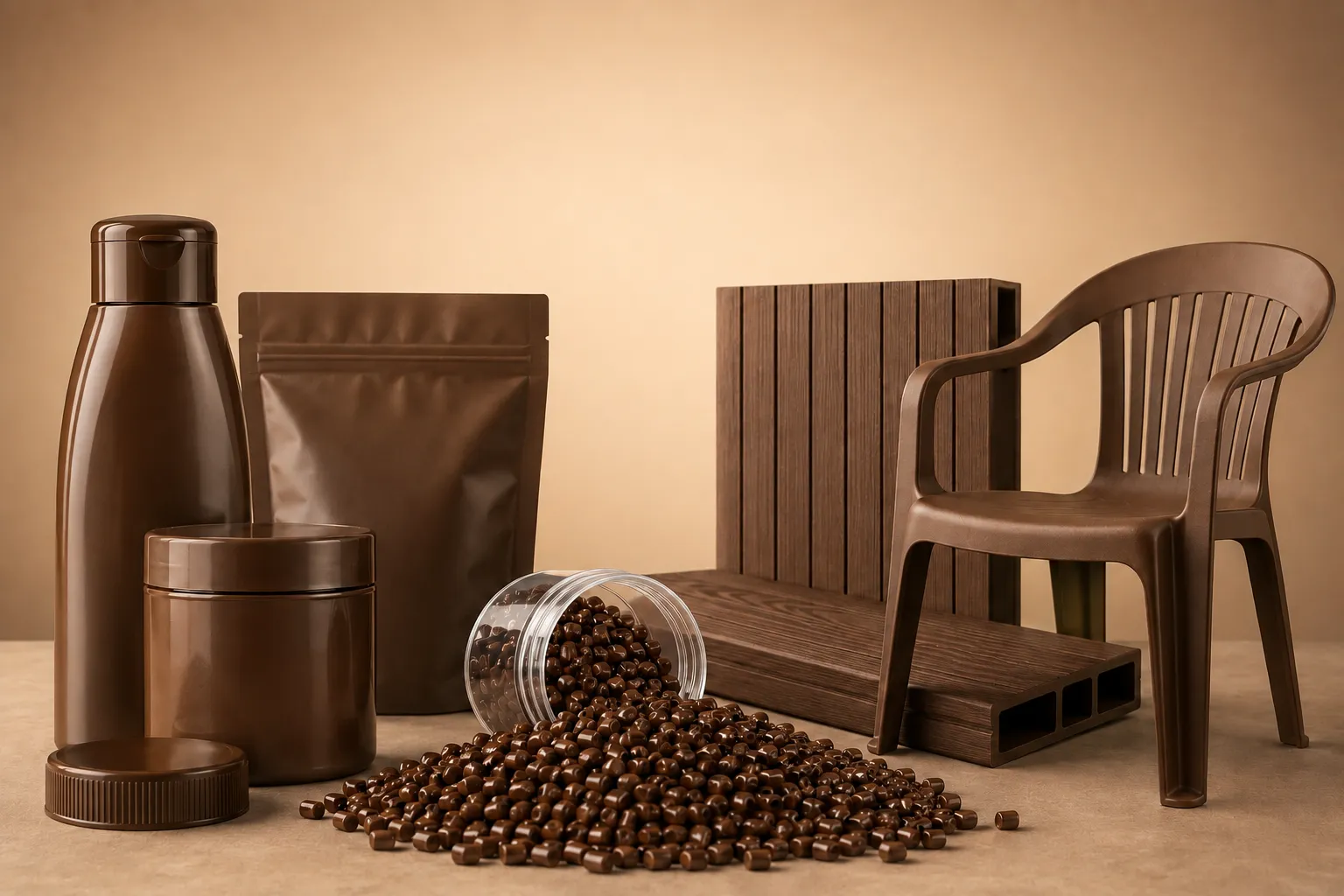
Brown masterbatch is a concentrated plastic colorant used to produce consistent brown shades in a wide range of polymer products. By combining selected pigments with a compatible carrier resin, it provides manufacturers with a convenient and efficient way to achieve colors ranging from light beige and natural wood tones to chocolate brown and dark coffee shades.
What Is Brown Masterbatch?
Brown masterbatch is a pellet-form color concentrate made from three main components:
- Brown pigments or a combination of different color pigments
- A polymer carrier resin
- Dispersing agents and other functional additives when required
During plastic processing, the masterbatch is mixed with the base resin at a specified dosage. It melts and disperses throughout the material, giving the finished product a uniform brown color.
Manufacturers can adjust the formulation to obtain different shades, including:
- Light brown
- Beige brown
- Reddish brown
- Yellowish brown
- Wood brown
- Coffee brown
- Chocolate brown
- Dark brown
The formulation can also be customized according to the polymer, processing method, product thickness, opacity, surface finish, and end-use requirements.

Why Is Brown Masterbatch Widely Used?
Brown is closely associated with wood, soil, coffee, paper, leather, and other natural materials. This makes it useful for products that need a warm, organic, rustic, or premium visual identity.
Compared with adding powder pigments directly, brown color masterbatch can offer several practical advantages:
- More consistent color between production batches
- Cleaner handling and easier storage
- Improved pigment dispersion
- Simplified dosing during production
- Reduced risk of airborne pigment dust
- Compatibility with automated feeding systems
- Easier shade adjustment and product standardization
These characteristics make brown masterbatch suitable for both large-scale manufacturing and customized product development.
Brown Masterbatch Applications in Packaging
Packaging does more than contain and protect a product. Its color also affects how customers perceive the brand and the contents inside. Brown packaging can create a natural, traditional, industrial, or environmentally conscious appearance.
1. Plastic Bottles and Containers
Brown masterbatch is commonly used in bottles, jars, cans, and rigid containers made from materials such as PP, PE, PET, and HDPE.
Typical applications include:
- Cosmetic and personal care bottles
- Household chemical containers
- Food ingredient jars
- Pharmaceutical packaging
- Lubricant and industrial liquid containers
- Coffee, tea, and snack packaging
Dark brown shades may also help reduce the amount of visible light reaching the packaged contents. However, when customers require specific light-protection properties, manufacturers should test the packaging according to the product’s technical and regulatory requirements.
2. Flexible Packaging Films
Brown masterbatch can be incorporated into blown film and cast film applications to produce:
- Shopping bags
- Garbage bags
- Mailing bags
- Protective wrapping
- Agricultural packaging
- Flexible product liners
The required masterbatch must provide good dispersion to reduce visible color spots, streaks, or uneven areas in thin films. The pigment system should also be suitable for the processing temperature and film thickness.
For thin packaging films, color strength is particularly important because the final shade can change significantly as the material becomes thinner.
3. Food Packaging
Brown tones are frequently associated with baked products, coffee, chocolate, grains, and natural ingredients. As a result, brown plastic packaging is often used for:
- Bakery product trays
- Coffee capsules and lids
- Chocolate containers
- Food storage boxes
- Takeaway packaging
- Caps and closures
If the finished product will come into direct contact with food, the brown masterbatch formulation must be based on appropriate raw materials and evaluated against the applicable food-contact regulations in the target market.
4. Caps and Closures
Bottle caps, jar lids, and container closures require stable color and reliable processing at high production speeds. Brown masterbatch can be formulated for injection molding or compression molding applications.
A suitable grade should offer:
- Consistent shade across production batches
- Good pigment dispersion
- Stable flow during molding
- Limited influence on mechanical performance
- Heat resistance suitable for the processing conditions
Brown caps can be matched with transparent, amber, beige, white, or custom-colored containers to create a coordinated packaging design.
5. Recycled Plastic Packaging
Brown is also a practical option for some recycled plastic products. Recycled raw materials may have varying base colors, which can make light or bright shades difficult to reproduce consistently. Medium and dark brown formulations may provide better color coverage in certain recycled resin applications.
However, the final result depends on:
- The original color of the recycled material
- Contamination levels
- Resin consistency
- Required product shade
- Masterbatch dosage
- Product thickness
Testing the actual recycled resin before mass production is therefore recommended.
Brown Masterbatch Applications in Furniture
Plastic furniture and furniture components often use brown shades to reproduce the appearance of wood, leather, rattan, or other natural surfaces. Brown masterbatch allows manufacturers to create this appearance while benefiting from the moldability, moisture resistance, and production efficiency of plastics.
1. Plastic Chairs and Tables
Possible designs include:
- Solid dark brown outdoor chairs
- Beige and brown household furniture
- Wood-inspired tables
- Coffee-colored restaurant furniture
- Two-tone molded furniture
For these large molded products, good dispersion is essential. Uneven pigment distribution may become especially visible across wide surfaces.
2. Wood-Plastic Composite Products
Wood-plastic composites, commonly known as WPC, combine plastic with wood flour or other natural fibers. Brown masterbatch is used to adjust the base color and enhance the wood-like appearance of products such as:
- WPC decking
- Wall panels
- Fence boards
- Furniture panels
- Decorative profiles
- Outdoor benches
Different brown shades can help imitate walnut, oak, teak, mahogany, and other wood tones. Manufacturers may also combine the masterbatch with embossing or co-extrusion technology to create a more realistic wood-grain surface.
Because wood flour naturally affects the final shade, sample testing should be conducted using the actual WPC formulation.
3. Rattan-Style Outdoor Furniture
Synthetic rattan furniture is often produced from PE or other weather-resistant plastic materials. Brown masterbatch helps create woven strips in natural-looking colors such as:
- Light rattan brown
- Honey brown
- Chocolate brown
- Grey brown
- Dark coffee brown
Outdoor furniture requires more than an attractive color. The masterbatch may also need UV stabilizers or weather-resistant pigments to reduce fading and color change caused by sunlight and outdoor exposure.
4. Furniture Edging and Decorative Profiles
The main requirements usually include:
- Accurate color matching
- Smooth extrusion performance
- Uniform surface appearance
- Good heat stability
- Compatibility with printing or surface treatment
Manufacturers should customize the color carefully because even small shade differences can become noticeable when they install plastic edging next to a wooden panel.
5. Furniture Fittings and Accessories
Many small furniture parts are also colored with brown masterbatch, including:
- Handles
- Feet and legs
- Brackets
- Corner protectors
- Connector covers
- Drawer components
- Decorative caps
Injection molding grades should provide stable color without significantly affecting dimensional accuracy or the mechanical properties of the finished components.
Key Benefits for Packaging and Furniture Manufacturers
Consistent Color Appearance
Properly dispersed brown masterbatch helps manufacturers maintain a stable shade across products, components, and production batches.
Customizable Brown Shades
The color can be adjusted according to a physical sample, Pantone reference, RAL reference, product image, or customer-specific color standard.
Efficient Production
Pellet-form masterbatch is easy to measure, mix, transport, and use in common plastic-processing equipment.
Natural and Wood-Like Aesthetics
Brown shades allow plastic packaging and furniture products to create a warmer, more natural appearance without using solid wood or other natural materials.
Functional Additive Integration
Depending on the application, the masterbatch may be combined with functional additives such as:
- UV stabilizers
- Antioxidants
- Processing aids
- Anti-static additives
- Light stabilizers
How to Select the Right Brown Masterbatch
Selecting brown masterbatch involves more than choosing a color from a chart. Manufacturers should provide detailed application information to the supplier.
1. Confirm the Base Polymer
The carrier resin should be compatible with the material being processed. Common materials include:
- Polypropylene (PP)
- Polyethylene (PE)
- High-density polyethylene (HDPE)
- Low-density polyethylene (LDPE)
- Polyethylene terephthalate (PET)
- Polystyrene (PS)
- Acrylonitrile butadiene styrene (ABS)
Using an unsuitable carrier may affect dispersion, processing, or finished-product performance.
2. Identify the Processing Method
The supplier should know whether the product will be manufactured by:
- Injection molding
- Blow molding
- Blown film extrusion
- Cast film extrusion
- Profile extrusion
- Sheet extrusion
- Compression molding
Each method has different requirements for pigment dispersion, heat stability, color strength, and melt flow.
3. Define the Exact Shade
A physical sample is often more reliable than an image displayed on a screen. Color appearance can also change depending on surface texture, gloss, material thickness, lighting, and the original color of the base resin.
4. Consider End-Use Conditions
High temperatures, chemicals, sunlight, humidity, or repeated cleaning may affect packaging and furniture products. Manufacturers should select the formulation according to the actual usage environment.
5. Conduct Production Trials
Laboratory color matching is an important starting point, but a small-scale trial using the actual resin and processing equipment provides a more accurate assessment before mass production.
Recommended Addition Ratio
The addition ratio of brown masterbatch depends on its pigment concentration, the target shade, the base resin color, and the product thickness.
A supplier may recommend a starting dosage after reviewing the application. Manufacturers should then make small adjustments during testing to achieve the desired shade and opacity.
Using more masterbatch does not always guarantee a better result. Excessive dosage may increase costs or influence the processing and physical properties of the finished product.
Frequently Asked Questions
Can brown masterbatch be used in recycled plastics?
Yes. Medium and dark brown shades may provide useful color coverage in some recycled plastic applications. Because recycled resin can vary between batches, production testing is important.
Does outdoor furniture require a special brown masterbatch?
Outdoor products normally require pigments with suitable weather resistance. UV stabilizers and other additives may also be considered based on the expected exposure conditions and service life.
How can manufacturers prevent uneven brown color?
Choose a masterbatch with good pigment dispersion, use a compatible carrier resin, maintain accurate dosing, mix the materials thoroughly, and keep processing conditions stable.
Conclusion
Brown masterbatch applications in packaging and furniture range from bottles, films, caps, and food containers to plastic chairs, WPC panels, synthetic rattan, and decorative furniture components.
Its main advantages include consistent coloration, convenient processing, flexible shade customization, and the ability to create natural or wood-inspired appearances. For reliable results, manufacturers should select the formulation according to the base polymer, production method, product thickness, end-use conditions, and relevant regulatory requirements.
Nuoxin Plastic provides customizable brown masterbatch solutions for different polymers and manufacturing processes. By supplying information about your resin, target shade, processing method, and final application, you can obtain a formulation developed around your specific production requirements.