
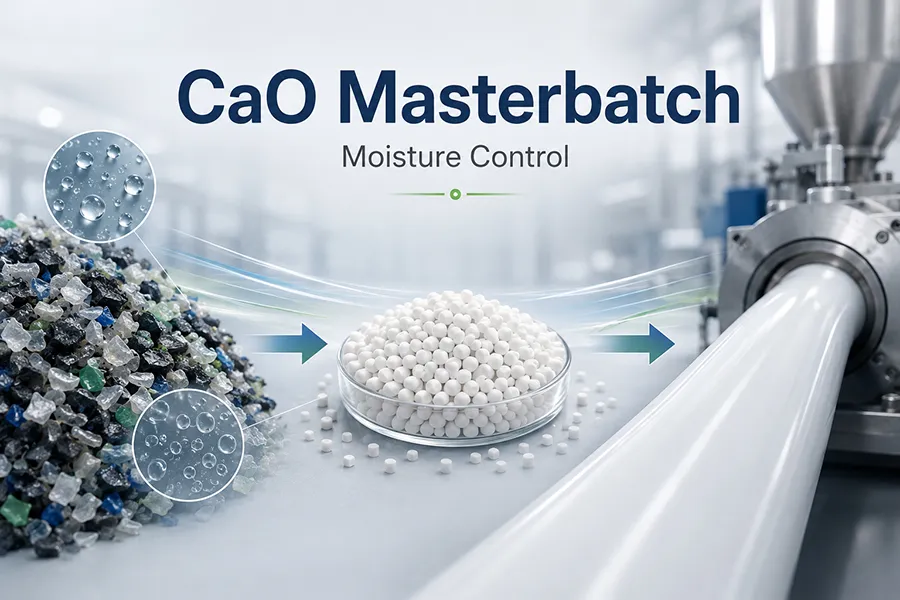
In recycled plastics processing, moisture content is a critical factor affecting product quality, especially in processes such as granulation, blown film production, injection molding, extrusion, and fiber drawing of recycled PE and PP. Unstable control of raw material moisture content can easily lead to problems such as bubbles, silver streaks, voids, rough surfaces, broken fibers, film bubble breakage, and reduced product strength.
1. Why are Recycled PE and PP Prone to Moisture and Bubbles?
Compared to virgin PP granules, which have no or no visible bubbles, recycled PP granules are rectangular in appearance with right-angled cut surfaces and contain bubbles. This is due to the difference in manufacturing methods between recycled and virgin PP. Recycled PP is produced by cooling compressed PP in water and then cutting it. Furthermore, during the cooling process in water, the scrap melts in the compressor, containing a lot of moisture, resulting in numerous bubbles in the granules.
2. Working Principle of Calcium Oxide (CaO) Masterbatch
The drying principle of calcium oxide masterbatch is based on its chemical reaction with water. It absorbs moisture and generates calcium hydroxide to achieve a drying effect. Calcium oxide (CaO) is a strongly alkaline oxide with strong hygroscopic properties. When it comes into contact with water, it undergoes a vigorous chemical reaction, producing calcium hydroxide (Ca(OH)₂) and releasing a large amount of heat. The reaction equation is: CaO + H₂O → Ca(OH)₂. Calcium oxide has a strong natural affinity for water, allowing it to convert moisture in the air into hydrates to dry the air. When calcium oxide comes into contact with humid air, a layer of calcium hydroxide forms on its surface, which then further absorbs moisture and CO₂ to form hydrates such as calcium carbonate, thus removing moisture from the air.
3. How Does CaO Masterbatch Reduce Bubbles, Streaks, and Voids?
In the processing of recycled PE and PP, bubble formation typically involves three stages: moisture introduced from the raw material, moisture vaporization at high temperatures, and gas retention in the melt, forming defects. The role of CaO masterbatch is to consume some of the moisture before it vaporizes and forms obvious bubbles, reducing the water vapor content in the melt.
After the moisture is absorbed by the CaO reaction, the chance of gas generation inside the melt decreases, and surface and internal defects in the product are reduced accordingly. For blown film production, CaO masterbatch helps reduce crystal points, air bubbles, film breakage, and thickness unevenness on the film surface; for extrusion granulation, it improves the cross-section and surface smoothness of the granules, reducing hollow and foamed granules; for injection molded products, it reduces silver streaks, air marks, and internal voids, improving appearance consistency; and for fiber drawing and woven bag production, it helps reduce fiber breakage, fuzz, and strength fluctuations.
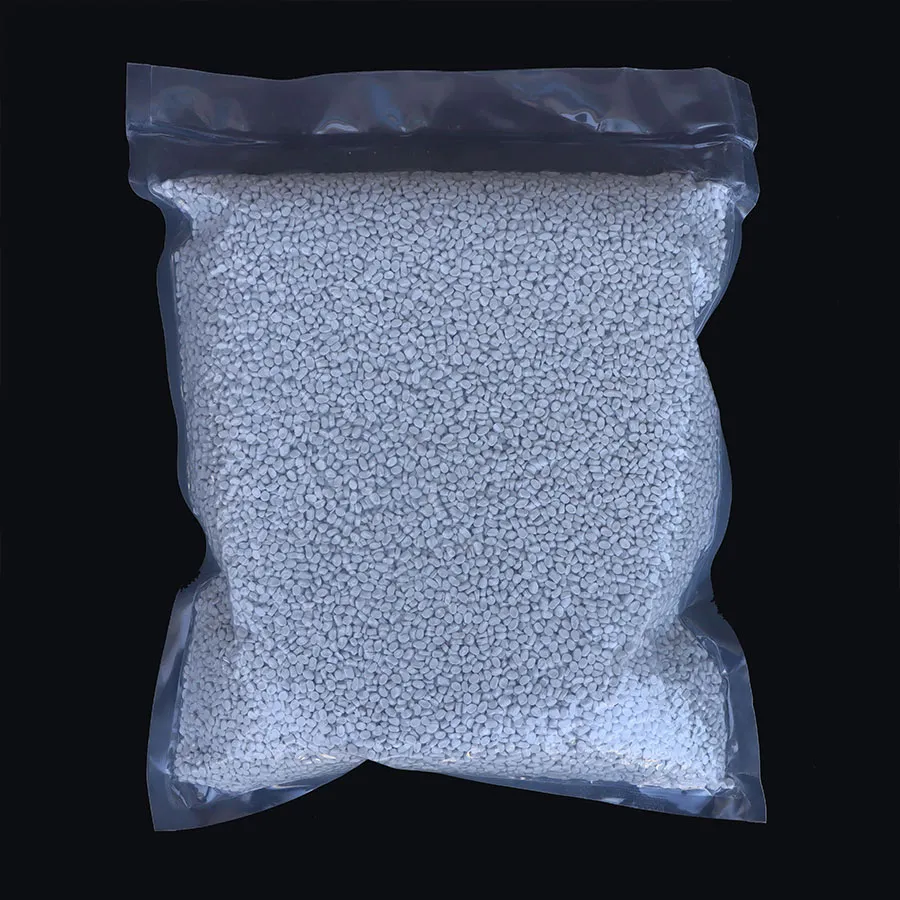
This is why CaO masterbatch is widely used in recycled PE film, recycled PP woven bags, recycled PE pipes, recycled PP sheets, and the modification of recycled plastic granules. It doesn’t simply “mask air bubbles,” but rather reduces gas generation from the source of moisture, making the processing more stable.
4. What are the Advantages of CaO Masterbatch Compared to Traditional Drying?
Traditional drying is a common dehumidification method in recycled plastics processing, but it also has some limitations. First, drying requires drying equipment and incurs energy costs. Second, recycled materials have complex forms, such as thin films, broken pieces, granules, and crushed materials, with uneven moisture distribution; simple drying may not completely solve the problem. Third, many factories, in order to increase output, have short turnaround times from raw material washing to processing, making prolonged drying impossible.
The advantage of CaO masterbatch is that it can be directly mixed with raw materials without changing the existing equipment structure. For recycled materials with slightly or moderately high moisture content, adding an appropriate amount of CaO masterbatch can usually significantly improve bubbles, silver streaks, and surface defects. At the same time, it reduces reliance on long drying times, lowers energy consumption and labor costs, and improves production continuity.
Of course, CaO masterbatch does not mean it can completely replace all drying processes. If the raw material has a very high moisture content, such as wet material that has not been spun dry after washing, mechanical dehydration or basic drying is still necessary. A more reasonable approach is to reduce most of the moisture through spin drying, air drying, or low-temperature drying, and then use CaO masterbatch to treat residual moisture and moisture fluctuations during processing. This approach ensures effectiveness while avoiding excessive masterbatch dosage that could negatively impact cost and product performance.
Conclusion
Calcium oxide (CaO) masterbatch is a practical solution for addressing moisture and bubble issues in the processing of recycled PE and PP. It reduces water vapor formation in the melt through a chemical reaction with moisture, thereby improving problems such as bubbles, streaks, voids, surface roughness, and processing instability.