
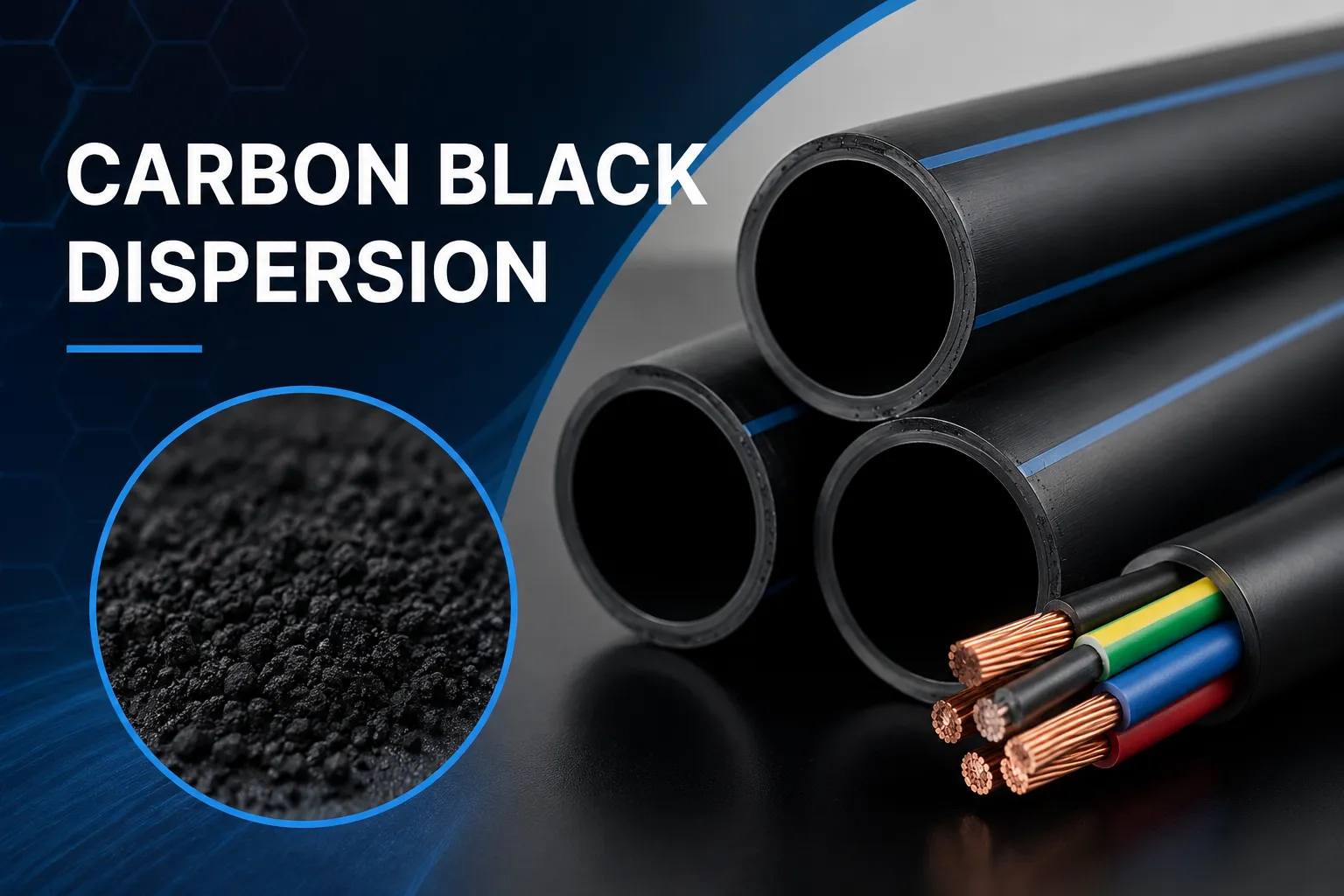
Carbon black is widely used in the plastics industry, serving both as a colorant and for functional purposes such as UV resistance and electrical conductivity. However, the inherent properties of carbon black make it prone to agglomeration, making it difficult to disperse and mix effectively within polymer melts. This article explains why black masterbatch for pipe dispersion is critical.
1. Carbon Black Dispersion Determines the Core Quality of Black Masterbatches
The plastics industry imposes strict requirements on raw material properties; products such as cable sheaths and fibers, for instance, demand high standards for pigment dispersion. Optimal pigment dispersion allows for precise control over plastic properties—including color, hue, viscosity, gloss, durability, and extrusion performance. In contrast, applications for consumer goods (such as molded flowerpots) generally do not require such a high degree of carbon black dispersion.
Achieving stable, high-level dispersion requires the use of high-shear mixing equipment—such as FCM or Banbury mixers—to compound the carbon black. With sufficient intensity, these mixers can ensure the complete blending of carbon black and the base resin. The type of carbon black used also influences dispersion; the smaller the carbon black particles, the more difficult it is to achieve good dispersion.
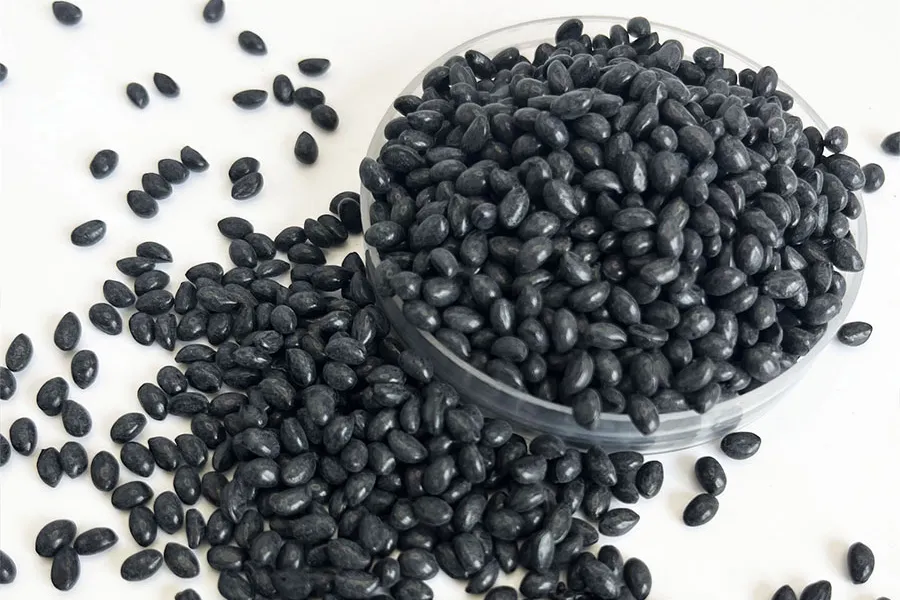
2. Poor Carbon Black Dispersion Affects Pipe Appearance and Service Life
The goal of the dispersion process is to manufacture products that meet customer performance requirements; however, poor dispersion quality or instability often prevents the carbon black from delivering its full performance potential. Low-quality or unstable dispersions manifest in the appearance and performance of the resulting masterbatch or final product. Common issues include the following:
- Terms such as “re-coarsening,” “grit,” and “agglomerates” are commonly used to describe small, gel-like clumps that form due to instability in the liquid color concentrate or plastic solution. Solutions to this problem involve improving dispersion through equipment upgrades, the addition of processing aids, or the adoption of other technical measures.
- Poor dispersion of the color concentrate leads to reduced blackness, the appearance of brown undertones, and low gloss—issues that carry over to the final product. Problems caused by poor dispersion can only be resolved by increasing mixing intensity. This can be achieved by selecting a more suitable grade of carbon black, extending mixing times, and optimizing mixing conditions.
- High black masterbatch for pipe loading increases viscosity, causing a rise in temperature during mixing. This is particularly detrimental to heat-sensitive resins. Excessive heat can lead to gel formation, thereby compromising dispersion quality and stability. Reducing the carbon black loading or maintaining an appropriate temperature helps mitigate this issue.
3. Carbon Black Dispersion is Critical for Cable Extrusion
Compared to standard plastic products, cable extrusion places higher demands on material stability. Black masterbatches are frequently used in products such as cable sheaths, outer jackets for communication and fiber-optic cables, and the outer layers of low-voltage cables. Cable products require not only a high-quality surface finish but also stable mechanical, electrical, and environmental resistance properties.
Poor carbon black dispersion in cable compounds can result in surface roughness, protrusions, granules, pinholes, or localized variations in wall thickness. These defects not only detract from the cable’s appearance but can also create weak points that compromise performance during service.
Uneven carbon black dispersion in cable sheaths can also adversely affect tensile strength, elongation at break, abrasion resistance, and crack resistance. Stability of the sheath layer is paramount for cables installed outdoors, underground, in conduits, or in complex environments. Localized sheath defects can impair the cable’s protective capabilities, compromising product safety and service life.
4. Carbon Black Dispersion Affects Blackness, Opacity, and Addition Rates
While a high ratio of carbon black to polymer is desirable in masterbatches, every polymer has a finite capacity for pigments. This limit can only be determined through practical formulation trials on actual production equipment. If the plastic mixture requires further dilution, sufficient polymer must be present to ensure the viscosity facilitates the incorporation of the masterbatch into the dilution resin. Optimal mixing performance depends partly on the viscosity requirements of the mixture when selecting the carbon black.
Naturally, the addition rate must be adjusted based on factors such as product thickness, resin type, target blackness, weather resistance requirements, and processing methods. Reputable suppliers typically offer formulation recommendations tailored to the customer’s specific application, rather than simply suggesting a fixed addition rate.
5. How to Evaluate Carbon Black Dispersion in Black Masterbatches?
Determining whether a black masterbatch is suitable for pipe and cable extrusion requires looking beyond mere visual color. Purchasing and manufacturing enterprises should focus on the following aspects:
- First, examine the surface of the extruded product for smoothness and check for defects such as black specks, un-dispersed particles, color spots, streaks, or roughness.
- Second, monitor the stability of melt pressure during production and observe whether screen clogging or material buildup occurs.
- Third, assess the uniformity of the product’s color and the consistency of its blackness, checking for significant color variations between batches.
- Fourth, verify whether key performance indicators—such as tensile properties, elongation at break, and weather resistance—meet the required standards for the pipe or cable sheath.
- Fifth, consider the compatibility between the black masterbatch and the target resin; for instance, PE pipes require a masterbatch suited to PE systems, while cable sheaths must be matched to the specific material system (e.g., PE, PVC, TPE).
For high-performance applications, it is advisable to conduct small-scale and pilot trials before bulk purchasing to evaluate product stability based on actual extrusion performance.
Summary
Carbon black dispersion is critical for black masterbatches used in pipe and cable extrusion because it directly impacts color quality, surface finish, mechanical properties, weather resistance, cable sheath stability, and extrusion efficiency. For products such as PE pipes, HDPE pipes, cable sheaths, and telecommunication conduits, high-dispersion black masterbatches enable manufacturers to achieve consistent aesthetics, reliable performance, and a more efficient production process.