

In the production of plastic products, the choice of filler masterbatch directly impacts product costs, processing performance, surface quality, and end-use effectiveness. For manufacturers of packaging films, blow-molded items, injection-molded products, sheets, and pipes, the judicious use of fillers not only reduces raw material costs but also enhances product rigidity, dimensional stability, surface finish, and processing efficiency. Common inorganic fillers on the market include calcium carbonate (CaCO₃), sodium sulfate (Na₂SO₄), talc, and barium sulfate. Among these, calcium carbonate is the most widely used, while Na2SO4 filler masterbatch has recently gained attention for applications in certain films, packaging, and low-cost plastic products. So, what exactly distinguishes sodium sulfate filler masterbatch from calcium carbonate fillers? Which one is better suited for your plastic production needs?
1. What is Na2SO4 Filler Masterbatch?
Plastics are not always composed of 100% pure resin; filler masterbatches are essential additives used to improve performance or reduce costs. Traditionally, calcium carbonate and talc have been the mainstream choices, but they suffer from a critical drawback: opacity. Their addition turns once-glossy, vibrant packaging bags into dull, grayish, or cloudy products—rendering them unsuitable for consumer goods that demand high transparency and a premium look.
The core advantage of na2so4 filler masterbatch is its superior transparency; with proper dosage control, it can be used without compromising clarity—a feat unmatched by traditional fillers like calcium carbonate. Its ultra-fine powder disperses evenly, ensuring a smooth film appearance while enhancing rigidity and toughness, thereby boosting both load-bearing capacity and impact resistance. Beyond mere filling, it improves printability and heat resistance, and can even function as an antiblocking agent or antistatic agent.
However, it is important to note that sodium sulfate is inherently hygroscopic. If the masterbatch production process is not tightly controlled or if storage conditions are humid, issues such as water marks, bubbles, silver streaks, or surface irregularities may arise during plastic processing. Consequently, the use of sodium sulfate filler masterbatch places specific demands on raw material drying, packaging integrity, and production management.

2. What is Calcium Carbonate Filler?
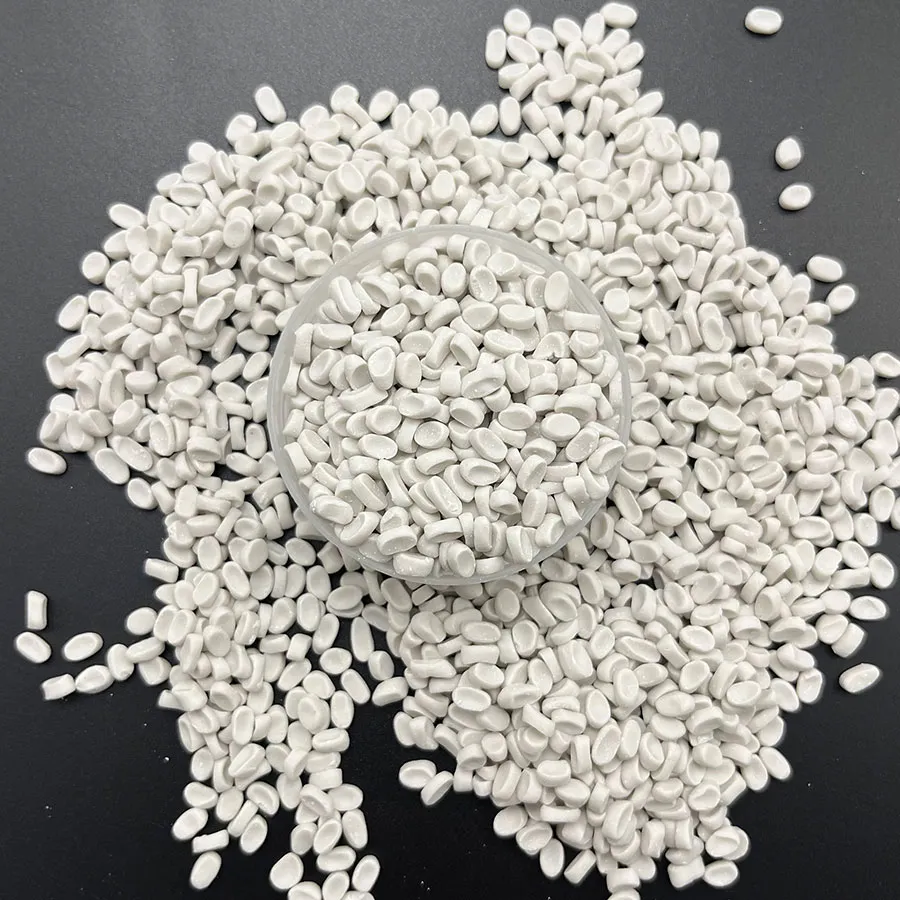
Calcium carbonate-filled masterbatch is produced by mixing, compounding, and pelletizing calcium carbonate with a carrier resin; the resulting granules are similar in volume to the base resin used in plastic products, making them highly valuable across the plastics industry. Subjecting the calcium carbonate powder to surface modification prior to masterbatch processing enhances its dispersibility, thereby significantly improving its interfacial bonding with the resin.
Calcium carbonate offers advantages such as a stable supply, moderate pricing, excellent processing adaptability, and a long history of successful application. It not only reduces raw material costs but also enhances the rigidity, dimensional stability, and heat resistance of plastic products. However, excessive loading can lead to issues such as reduced toughness, lower tensile strength, and diminished transparency.
3. Cost Comparison
From a cost perspective, sodium sulfate-filled masterbatch generally offers a price advantage, making it particularly suitable for low-end packaging products where cost sensitivity is high. Industry statistics indicate that the market price of sodium sulfate is merely one-fifth to one-tenth that of standard plastic raw materials. By incorporating 40% to 70% na2so4 filler masterbatch, companies can directly cut raw material costs by 15% to 30%. This represents a sound economic decision rather than a compromise on quality.
While calcium carbonate fillers are also cost-effective, their established track record and stable performance make them common choices for both low-to-mid-range and mid-to-high-end plastic products. Although the unit price of certain calcium carbonate-filled masterbatches may exceed that of sodium sulfate-filled versions, they offer a more balanced overall performance profile and generally ensure greater production stability.
Therefore, if a company’s primary goal is extreme cost reduction—and the product has modest requirements regarding strength, toughness, and storage stability—sodium sulfate-filled masterbatch is a viable option. Conversely, if the objective is to reduce costs while maintaining superior processing stability and product performance, calcium carbonate fillers are generally the safer, more reliable choice.
4. Differences in Processing Performance
During plastic processing, factors such as filler dispersibility, moisture content, flowability, and thermal stability significantly influence production outcomes. Sodium sulfate-filled masterbatch demonstrates good dispersion in certain film products, allowing for relatively smooth surface finishes when used correctly. However, given the hygroscopic nature of sodium sulfate, moisture protection measures are essential both before and during production. If the raw materials absorb excessive moisture, it may compromise the stability of the film-blowing process and even lead to surface defects on the film.
Calcium carbonate fillers offer greater processing versatility. Surface-treated calcium carbonate exhibits good compatibility with polyolefin resins, ensuring stable performance across processes such as film blowing, injection molding, and extrusion. For manufacturers engaged in continuous production, calcium carbonate-filled masterbatches offer a wider processing window, making it easier to maintain consistent product quality.
In this regard, calcium carbonate fillers are better suited for factories that prioritize production stability, whereas sodium sulfate-filled masterbatches are more appropriate for enterprises with mature process management capabilities and the ability to strictly control storage and drying conditions.
5. Impact on Product Performance
Na2SO4 filler masterbatches are suitable for plastic products that do not require high mechanical strength. They help reduce costs while maintaining an acceptable appearance in certain film products. However, excessive loading can compromise the product’s tensile strength, heat-sealing performance, and durability. Consequently, when manufacturing items like packaging bags or trash bags, the formulation must be adjusted based on factors such as product thickness, load-bearing requirements, and customer specifications.
Calcium carbonate fillers, on the other hand, enhance product rigidity, hardness, and dimensional stability, making them suitable for a wide range of applications including injection-molded parts, pipes, sheets, woven bags, and blow-molded products. For plastic products requiring structural integrity, calcium carbonate fillers are generally more reliable than sodium sulfate-filled masterbatches. However, since calcium carbonate can affect transparency and toughness, the addition ratio must be carefully controlled for high-clarity films or products requiring high toughness.
In short, sodium sulfate is better suited for “low-cost filling,” while calcium carbonate is better suited for “balanced performance filling.”
6. How to Choose the Right Application?
If your products fall into categories such as low-end shopping bags, trash bags, disposable packaging, or standard courier bags—where requirements for load-bearing, toughness, and weather resistance are modest, yet market competition is fierce and cost pressures are high—then sodium sulfate-filled masterbatches are a viable option. They help reduce raw material costs while ensuring adequate processing performance. If your products include plastic pipes, injection-molded parts, blow-molded containers, PP woven bags, sheets, packaging films, or other plastic goods requiring high stability, calcium carbonate fillers are generally more suitable. They offer a wider range of applications and a more mature processing technology, making them ideal for stable, long-term production.
For mid-to-high-end plastic products—especially when customers have specific requirements regarding tensile strength, impact resistance, surface quality, and dimensional stability—it is advisable to prioritize high-quality calcium carbonate-filled masterbatches rather than simply seeking the lowest-priced fillers.
7. What Should be Considered When Selecting a Filled Masterbatch?
Whether choosing na2so4 filler masterbatch or calcium carbonate filler, price should not be the sole deciding factor. Enterprises must also consider filler content, powder fineness, whiteness, dispersion, moisture content, melt flow index, carrier resin type, and compatibility with their existing raw materials.
For blown film products, key considerations include dispersion, film surface quality, heat-sealing performance, and tensile strength; for injection-molded products, focus on flowability, shrinkage, rigidity, and surface finish; for pipes and sheets, prioritize dimensional stability, pressure resistance, and long-term performance.
Additionally, it is recommended to conduct small-scale and pilot trials before full-scale production to determine the appropriate addition ratio based on actual processing data. Factors such as equipment, resin type, product thickness, and specific customer requirements will all influence the final formulation.
Which is Better for Your Plastic Production?
There is no absolute “better” or “worse” between na2so4 filler masterbatch and calcium carbonate filler; the choice depends on product positioning and production goals. If you primarily manufacture low-cost, disposable plastic packaging with modest performance requirements, sodium sulfate-filled masterbatch can help you further reduce costs. If you aim to balance cost, processing stability, and product performance, calcium carbonate filler is generally the safer and more established choice.