

Making a plastic product black is relatively straightforward. Achieving consistent color, uniform dispersion, and reliable processing at an economical dosage requires more careful material selection.
Plastic black masterbatch is a concentrated mixture of carbon black, carrier resin, and processing additives. Supplied in pellet form, it allows manufacturers to introduce black pigment into plastics through controlled dosing and mixing, while reducing the dust associated with handling loose pigment.
However, not every grade performs equally well in every application. The right choice depends on the base polymer, processing method, product thickness, and required properties.
Common Applications of Plastic Black Masterbatch
Black masterbatch is widely used in packaging films, agricultural products, irrigation systems, electrical components, and other plastic goods. Each application places different demands on color, dispersion, and performance.
| Application | Typical Products | Key Selection Considerations |
|---|---|---|
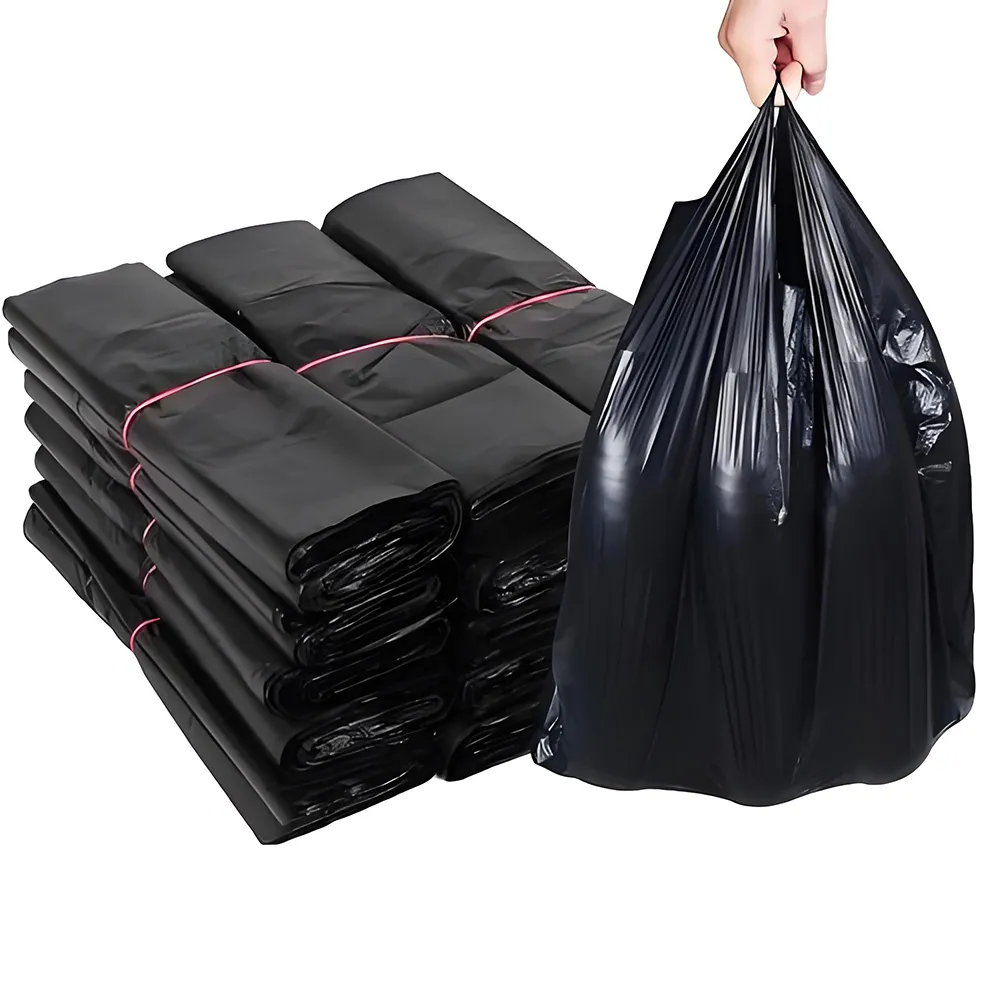
| Films and packaging | Garbage bags, courier bags, industrial packaging films | Opacity, dispersion, and film surface quality |
| Injection molding | Plastic housings, storage crates, household components | Blackness, undertone, surface appearance, and color consistency |
| Extrusion | Pipes, profiles, and sheets | Dispersion, processing stability, and finished-product properties |
| Agriculture | Mulch films, irrigation pipes, and related fittings | Light blocking and outdoor performance requirements |
| Wire and cable | Cable jackets and protective components | Polymer compatibility, dispersion, and electrical requirements |
For films, thickness is an important consideration. A masterbatch that provides sufficient opacity in a thick sample may still allow light through when used in a thinner film. Samples should therefore be evaluated at a thickness close to the actual finished product.
For injection-molded parts, blackness and gloss should be assessed separately. A glossy black appearance depends on the base resin, mold finish, and processing conditions as well as the masterbatch. Increasing dosage alone may not achieve the desired finish.
Standard coloring grades should also not be treated as substitutes for conductive black masterbatch. Applications requiring antistatic or conductive properties need a suitable formulation and verification of the finished product’s electrical performance.
How to Determine the Right Dosage
There is no single black masterbatch dosage suitable for every plastic product. The required addition rate depends on pigment concentration, coloring strength, base resin color, product thickness, opacity requirements, and mixing efficiency.
Start with the supplier’s recommended range for the specific grade, then adjust it through production trials. A dosage recommended for one formulation should not automatically be applied to another.
The main factors affecting dosage include:
- Masterbatch formulation: Equal carbon black content does not necessarily mean equal coloring performance. Carbon black type and dispersion quality also matter.
- Product thickness: Thin films and thin-walled parts can have different opacity requirements from thicker products.
- Base material: Virgin resin, recycled resin, and mixed-color feedstock can produce different results.
- Performance requirements: A formulation intended only for coloring should not be evaluated in the same way as one required to provide additional functional performance.
It is also important to define how the addition rate is calculated. When expressed as a percentage of the total blend:
Masterbatch dosage (%) = Masterbatch weight ÷ Total blend weight × 100
For example, a 100 kg blend containing 2% masterbatch consists of 2 kg of masterbatch and 98 kg of other materials. This is a calculation example, not a universal dosage recommendation.
If there are no other sources of carbon black in the formulation:
Final carbon black content (%) = Masterbatch dosage (%) × Carbon black content in masterbatch (%) ÷ 100
A masterbatch containing 40% carbon black, used at a 2% addition rate, contributes approximately 0.8% carbon black to the final blend.
Masterbatch dosage and final carbon black content are different measurements. Buyers and production teams should distinguish between them when discussing formulations and specifications.
How to Evaluate Black Masterbatch Quality
Pellet appearance alone cannot establish the quality of a black masterbatch. More useful evidence comes from its performance in the intended resin under actual processing conditions.
Dispersion is a primary consideration. Carbon black should be distributed uniformly throughout the plastic. Poor dispersion may produce agglomerates, specks, or streaks, particularly noticeable in thin films. Visual inspection can identify obvious defects, while more demanding applications may require microscopic examination or suitable dispersion testing.
Blackness, undertone, and opacity should be evaluated separately. Blackness describes the depth of color, undertone refers to subtle bluish or brownish differences, and opacity describes resistance to light transmission. Compare samples using the same resin, dosage, thickness, and processing conditions.
Carrier compatibility is equally important. The carrier resin must be suitable for the base polymer and processing temperature. A grade designed for polyethylene should not be assumed suitable for every engineering plastic. Poor compatibility can affect surface appearance, processing behavior, or finished-product properties.
Cleanliness and batch consistency also matter. Contamination, moisture, or volatile components may contribute to defects and production instability. For ongoing purchasing, assess whether different batches maintain consistent color, dispersion, and effective dosage.
A higher carbon black percentage does not automatically indicate a better product. The more useful question is whether the masterbatch consistently produces acceptable parts at an economical addition rate.
Troubleshooting Common Processing Problems
When a defect appears, increasing the masterbatch dosage should not be the automatic first response. Identifying the cause helps avoid higher material costs without a corresponding improvement.
| Common Problem | Possible Contributing Factors | Suggested Checks |
|---|---|---|
| Gray appearance or insufficient blackness | Low dosage, changing base resin color, unsuitable coloring strength | Check dosing accuracy and feedstock, then compare dosage levels |
| Insufficient film opacity | Film thickness variation, inadequate opacity, unsuitable addition rate | Evaluate light transmission at the actual production thickness |
| Specks or streaks | Poor dispersion, insufficient mixing, equipment residue, contamination | Check mixing, equipment cleanliness, and masterbatch dispersion |
| Bubbles or silver streaks | Moisture, volatiles, temperature, or venting problems | Examine material condition and processing settings |
| Color variation between batches | Unstable dosing, feedstock changes, masterbatch variation | Keep the formulation and process consistent and compare retained samples |
During trials, test several addition rates within the supplier’s recommended range. Record appearance, processing stability, and relevant finished-product properties under consistent conditions.
The preferred dosage is the level that reliably meets the requirements without unnecessary material use.
Compare Actual Cost in Use
The purchase price per kilogram is only one part of the cost of using black masterbatch. Dosage, scrap rate, cleaning requirements, and production adjustments also influence overall economics.
Consider this hypothetical comparison, assuming both products meet the same quality requirements:
| Item | Masterbatch A | Masterbatch B |
|---|---|---|
| Price per kilogram | $1.20 | $1.50 |
| Required dosage | 3% | 2% |
| Masterbatch used per 1,000 kg blend | 30 kg | 20 kg |
| Masterbatch cost per 1,000 kg blend | $36 | $30 |
Although Masterbatch B has a higher purchase price, its lower dosage reduces the masterbatch cost per tonne of blend. A complete comparison should also account for base resin costs, production losses, and processing performance.
When requesting a quotation, provide the supplier with your base resin, recycled-material content, processing method, product thickness, and target appearance. Include any special performance requirements and request technical data, dosage guidance, and samples for testing.
The right plastic black masterbatch should deliver the required appearance while supporting stable processing and competitive production costs. Evaluating application suitability, dosage, and quality together provides a stronger basis for purchasing than comparing price or pigment content alone.
Looking for black masterbatch for film, injection molding, or extrusion? Share your base material, processing method, and finished-product requirements with Nuoxin to discuss suitable grades and sample options.