

Injection molding is one of the most widely used processing methods for manufacturing plastic products. A vast array of plastic goods—ranging from household appliance housings, automotive parts, and electronic components to packaging containers, toys, daily necessities, and industrial accessories—are produced using this process. Throughout production, the masterbatch not only determines the color and appearance of the plastic product but also directly influences material flow, dispersion, mechanical properties, weather resistance, and production stability.
Selecting the right masterbatch helps injection molding companies minimize issues such as color variation, black specks, flow lines, silver streaks, and surface defects; it also improves product yield rates and reduces the time required for color changes and machine adjustments. Conversely, if the masterbatch is incompatible with the base resin or if the pigment lacks sufficient heat resistance, problems such as color instability, mold fouling, and degraded mechanical properties may arise.
Therefore, the “optimal masterbatch” is not a single product, but rather a masterbatch solution that is precisely matched to the raw materials, processing temperatures, product color, usage environment, and quality requirements.
1. Why is masterbatch so important for injection molding?
Masterbatch typically consists of pigments or dyes, a carrier resin, and dispersing agents. During production, the masterbatch is mixed with plastic raw materials at a specific ratio, then melted, plasticized, and injected into the mold by the injection molding machine.
Compared to using raw pigment powders, masterbatch offers advantages such as easy dosing, uniform dispersion, minimal dust generation, color stability, and operational simplicity. For injection molding companies engaged in continuous or high-volume production, high-quality masterbatch can significantly boost production efficiency.
1.1 Enhancing color consistency
Injection-molded products generally require color consistency across different production batches. High-quality masterbatch undergoes thorough compounding and dispersion, ensuring pigments are evenly distributed within the plastic melt; this reduces issues such as color variation, specks, and uneven coloration.
Stable masterbatch formulations are particularly crucial for products with strict color requirements, such as automotive interior parts, appliance housings, electronic components, and branded packaging.
1.2 Improving product surface quality
Poor pigment dispersion can easily lead to surface defects such as color streaks, flow marks, spots, granules, or uneven gloss. Masterbatches with excellent dispersion properties ensure a more uniform plastic melt, helping finished products achieve a smooth, fine, and consistent surface finish.
Particular attention should be paid to the dispersion and compatibility of masterbatches when producing high-gloss parts, transparent components, thin-walled parts, and parts where aesthetics are critical.
1.3 Enhancing Production Efficiency
Using masterbatches simplifies the raw material mixing and metering processes, reduces dust contamination, and shortens color-changeover times. Stable masterbatches also minimize the need for repeated color adjustments, mold trials, and downtime for cleaning, thereby increasing the utilization rate of injection molding equipment.
For manufacturers handling large orders, a wide variety of colors, or frequent color changes, the processing stability of the masterbatch directly impacts overall production costs.
2. Common Types of Masterbatches for Injection Molding
Different injection-molded products have varying requirements regarding color, performance, and operating environments; therefore, the appropriate type of masterbatch must be selected.
2.1 Color Masterbatches
Color masterbatches provide plastic products with colors such as red, blue, yellow, green, orange, and purple, as well as various custom shades. Their key advantages include vibrant colors, strong tinting strength, and ease of use; they can also be color-matched based on customer samples, color cards, or Pantone codes.
Color masterbatches are widely used in toys, consumer goods, packaging, home appliances, furniture accessories, automotive parts, and electronic product housings.
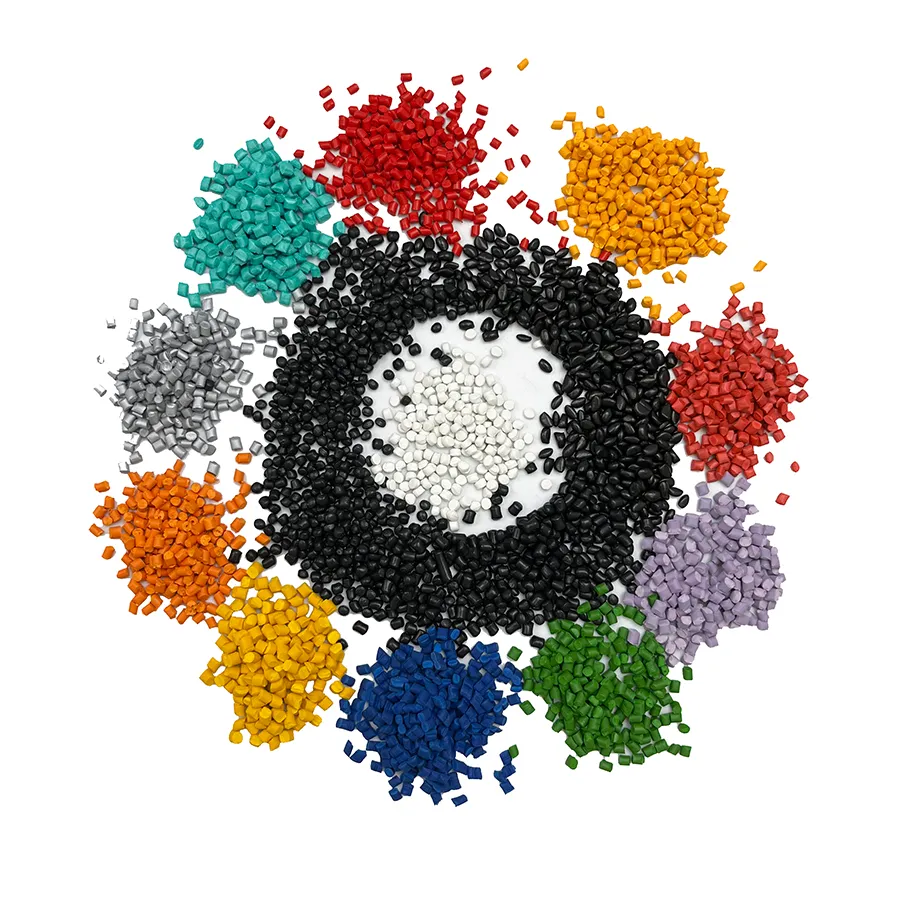
For injection-molded products, color masterbatches must possess good heat resistance to ensure that pigments do not decompose or undergo significant color changes at injection molding temperatures.
2.2 Black Masterbatches
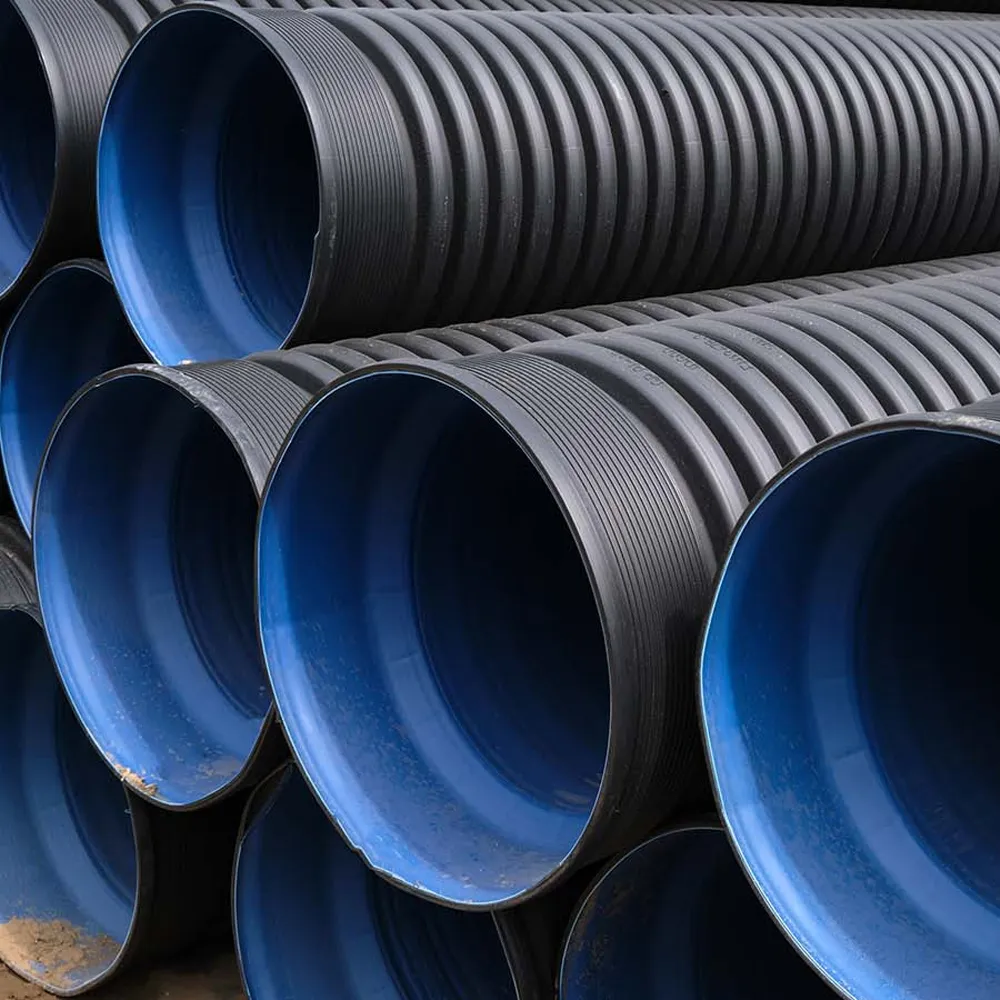
Black masterbatches typically consist of carbon black, a carrier resin, and dispersing agents, offering excellent blackness, opacity, and coloring effects. Some black masterbatches also enhance the UV resistance and weatherability of plastic products.
Black masterbatches are suitable for automotive parts, electronic and appliance housings, plastic pallets, pipe fittings, industrial components, trash cans, and outdoor plastic products.
When selecting black masterbatches for injection molding, key factors to consider include carbon black dispersion, blackness, gloss, filtration performance, and the impact on the material’s mechanical properties. Poorly dispersed carbon black can lead to black specks, granules, and surface pitting, and may even clog filters or impair flow during injection molding.
2.3 White Masterbatch
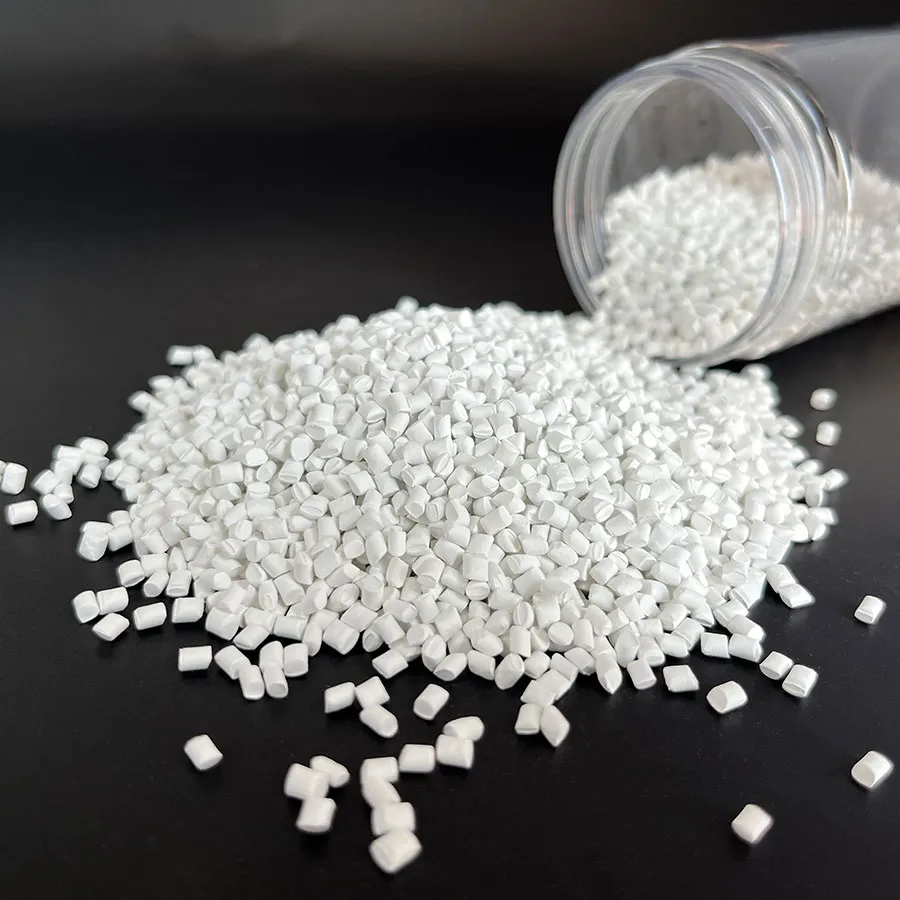
White masterbatch typically utilizes titanium dioxide as its primary white pigment, offering high whiteness, brightness, and opacity. High-quality white masterbatch can achieve a uniform, brilliant white finish even at low addition rates.
It is commonly used in applications such as home appliance housings, food packaging, medical supplies, household goods, daily necessities, and electrical components.
When used in injection molding, key factors to evaluate include whiteness, opacity, resistance to yellowing, and dispersion quality. For materials requiring high-temperature processing, pigment systems with superior heat resistance must be selected.
2.4 Functional Masterbatch
Beyond providing color, functional masterbatches impart specific properties to plastic products, such as UV resistance, antistatic capabilities, flame retardancy, antioxidant properties, brightening, toughening, antimicrobial action, slip characteristics, and weather resistance.
In production, companies can combine color and functionality into a single masterbatch, thereby reducing the number of raw material types and mixing steps. For instance, outdoor injection-molded parts might use a masterbatch that offers both color and UV resistance, while electronic components could utilize masterbatches with antistatic or flame-retardant properties.

3. How to Select the Best Color Masterbatch for Injection Molding?
3.1 Verify Carrier Resin Compatibility
The carrier resin within the color masterbatch must be highly compatible with the base plastic. Common injection molding materials include PP, PE, ABS, PS, HIPS, PET, PA, PC, POM, and TPU; these materials differ significantly in terms of processing temperature, polarity, and flow characteristics.
For example, a color masterbatch designed for PP products may not be suitable for PA or PC. Carrier incompatibility can lead to issues such as delamination, silver streaks, flow marks, surface blooming, or reduced mechanical properties.
Therefore, when purchasing color masterbatch, it is essential to clearly inform the supplier of the specific type and grade of the base resin, as well as whether recycled material is being used.
3.2 Select Pigments Based on Processing Temperature
Pigments vary in their heat resistance. While some organic pigments offer vibrant colors, they may decompose, fade, or undergo hue shifts at high temperatures. Inorganic pigments generally offer superior heat resistance, though color options and vibrancy may be more limited.
Injection molding temperatures for PP, PE, and PS are relatively low, whereas engineering plastics such as PA, PC, and PET typically require higher processing temperatures. For engineering plastics, color masterbatches must utilize high-temperature-resistant pigments and compatible carriers to prevent discoloration, odors, or decomposition during production.
3.3 Focus on Dispersion Performance
Dispersion is a key indicator of color masterbatch quality. Pigment particles must be uniformly dispersed within the resin to ensure consistent color and a high-quality surface finish.
Higher levels of dispersion are required for thin-walled injection-molded parts, precision components, and high-gloss products. Otherwise, even minute pigment agglomerates can result in visible black specks, color spots, or surface defects.
High-quality masterbatches typically achieve superior pigment dispersion through optimized pigment pre-treatment, carrier selection, additive formulations, and twin-screw extrusion processes.
3.4 Assess the Impact on Flowability
Injection molding places high demands on melt flowability, particularly for products with complex geometries, thin walls, or long flow paths. If the addition of a color masterbatch significantly reduces material flowability, it may lead to issues such as incomplete filling (short shots), prominent weld lines, or increased molding pressure.
The melt flow characteristics of the masterbatch should ideally match those of the base resin. For applications such as thin-walled packaging, precision parts, and large molded components, high-concentration masterbatches that offer good flowability at low dosage rates are often preferred.
3.5 Consider the End-Use Environment
The choice of color masterbatch depends not only on the injection molding process but also on the product’s intended end-use environment.
Outdoor products require excellent weatherability and UV resistance; automotive parts demand heat resistance, light stability, and low odor; food packaging must comply with food-contact regulations; children’s toys must meet safety standards regarding heavy metals; and electronic appliances may require flame retardancy, antistatic properties, or electrical insulation.
Clearly defining the product’s application scenario and regulatory requirements helps prevent future issues such as fading, aging, pigment migration, and non-compliance with safety standards.
2. How is the Dosage Ratio Determined?
The dosage ratio for color masterbatches depends on factors such as pigment concentration, the target color, the color of the base resin, product thickness, and opacity requirements. While typical dosage rates range from 1% to 4%, the specific ratio should be determined based on supplier recommendations and actual mold trial results. High-concentration masterbatches can achieve the target color at lower dosage levels, helping to minimize the impact on the material’s physical properties. However, a higher concentration does not necessarily guarantee better results; if pigment dispersion is inadequate, high concentrations can actually lead to issues such as color specks and processing instability.
Before full-scale production, it is advisable to determine the optimal dosage through small-batch trials and to record parameters such as injection temperature, back pressure, screw speed, holding time, and cooling conditions. For products with strict color requirements, colorimeters can be used to inspect the samples.
3. Common Masterbatch Issues During Injection Molding
3.1 Color Variation in Finished Products
Color variation can stem from batch-to-batch differences in the masterbatch, inconsistent dosage, uneven mixing, fluctuations in injection temperature, or variations in the base color of the raw materials.
Solutions include using automatic dosing equipment, extending mixing times, stabilizing injection parameters, and maintaining consistency in the base resin grade and the proportion of regrind material used.
3.2 Surface Flow Marks or Uneven Color
Flow marks are often associated with differences in flow characteristics between the masterbatch and the base resin, poor dispersion, or improper injection speed settings. Adjustments can be made to the barrel temperature, injection speed, back pressure, and screw speed; additionally, one should verify that the masterbatch carrier resin is compatible with the base resin.
3.3 Appearance of Black Specks or Particles
Black specks may result from pigment agglomeration, moisture absorption by the masterbatch, carbon buildup in the equipment, raw material contamination, or excessive processing temperatures. Ensure raw materials are dried prior to production and regularly clean the barrel, screw, and hot runner system.
3.4 Fading or Discoloration of Finished Products
Fading usually indicates that the pigment’s heat, light, or weather resistance fails to meet product requirements. In such cases, a more stable pigment system should be selected, and the masterbatch’s ability to withstand actual processing temperatures and end-use environments must be verified.
4. How to Collaborate with Masterbatch Suppliers?
A reliable masterbatch supplier should not only offer standard products but also provide customization based on the customer’s specific material, equipment, and application requirements. When developing masterbatches for injection molding, customers should provide the supplier with the following information whenever possible:
- Base resin type and specific grade;
- Product color sample, Pantone code, or standard color chip;
- Injection molding processing temperatures and equipment type;
- Product thickness, surface finish, and gloss requirements;
- Requirements for outdoor use, food contact, flame retardancy, or other functional properties;
- Estimated masterbatch dosage (let-down ratio) and procurement volume.
The more complete the information, the easier it is for the supplier to accurately formulate the product and shorten the sampling and color-matching cycle.
Before bulk procurement, it is advisable to conduct sample testing and small-batch trial production. Full-scale production should only commence after confirming that color, dispersion, flowability, mechanical properties, and production stability meet the required standards.
Conclusion
The ideal masterbatch for successful injection molding must possess excellent color stability, dispersion, heat resistance, flowability, and resin compatibility. Selection should not be based solely on price or color; factors such as the base resin, injection molding parameters, product structure, operating environment, and regulatory requirements must also be comprehensively considered.
High-quality masterbatches help minimize color variations, flow lines, black specks, and surface defects, while reducing color-change and machine-setup times, thereby improving product yield and production efficiency. For injection-molded products with specific color or functional requirements, customized masterbatches often better meet actual production needs than off-the-shelf products.
By selecting a professional masterbatch supplier and completing color matching, mold trials, and performance verification prior to mass production, injection molding companies can achieve more consistent color results, higher production efficiency, and more competitive final products.