
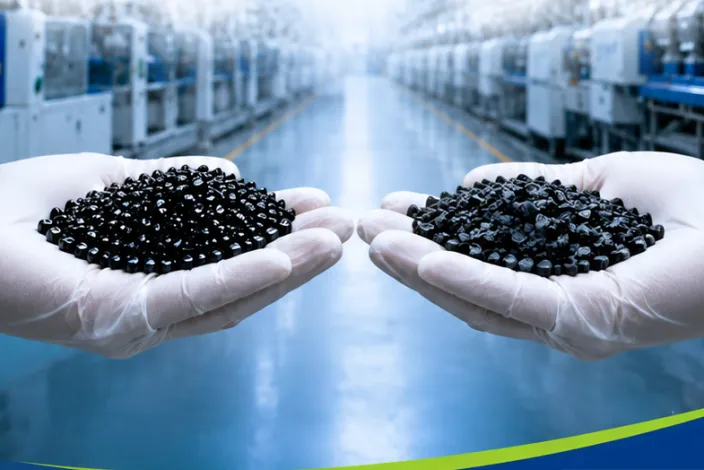
Faced with a vast array of masterbatch products on the market, how can you precisely match your production needs while avoiding procurement pitfalls? This article outlines the key criteria for evaluation, helping you find plastic masterbatch manufacturer solution that truly fits your requirements.
1. The Fundamental Differences in Masterbatches: Why General-Purpose Products May Not Suffice
As the core vehicle for plastic coloration, a masterbatch’s performance depends largely on the compatibility between its carrier resin and the pigments. While general-purpose products offer broad applicability, they often fall short in critical areas such as heat resistance and dispersion uniformity.
Take masterbatches designed for nylon, for instance: the carrier resin must be compatible with the nylon base material; otherwise, uneven coloration or a decline in mechanical properties may occur. Such specialized products typically require higher heat resistance ratings and superior dispersion stability.
The primary rule for assessing suitability is that compatibility between the carrier resin and the base material takes precedence over color appearance. This explains why two seemingly identical red masterbatches can yield vastly different results when used with ABS versus nylon.
2. Beyond Appearance: Three Often-Overlooked Performance Dimensions
A common mistake during procurement is focusing solely on color performance and unit price while ignoring key indicators that impact actual production:
- Thermal stability: Determines color retention during high-temperature processing; insufficiency can lead to batch-to-batch color variations.
- Migration resistance: Affects color fastness in humid environments or during long-term use.
- Dispersion uniformity: Directly correlates with surface finish quality and the consistency of mechanical properties.
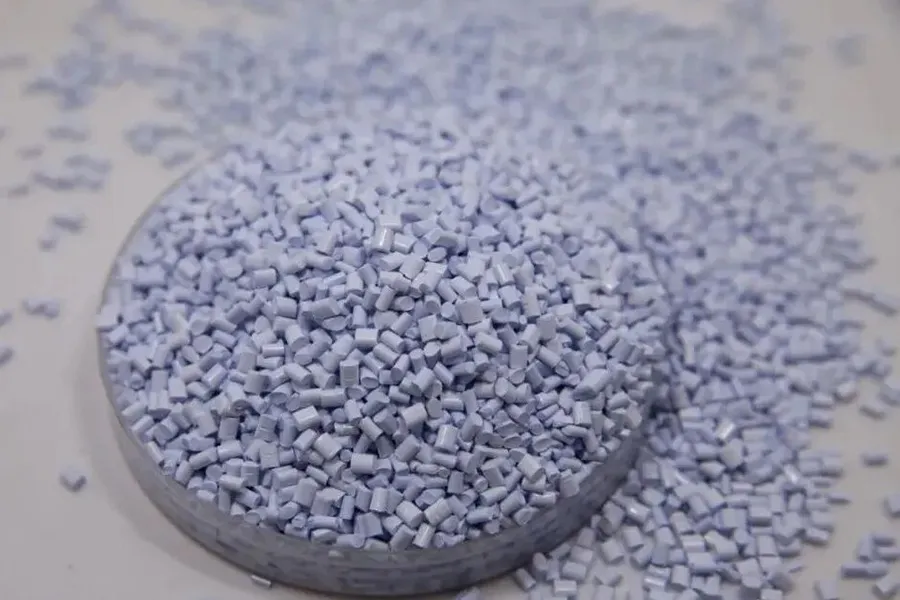
These less obvious indicators require verification through actual sampling and testing. Relying solely on data sheets is often insufficient for an accurate assessment, especially in scenarios with strict compliance requirements, such as food-grade masterbatches.
3. How to Precisely Select the Right Masterbatch Type Based on Application?
When selecting a masterbatch manufacturer, compatibility with the target plastic base material is the primary consideration. Different plastics (such as PP, PE, ABS, etc.) have distinct requirements regarding masterbatch dispersion and heat resistance; a mismatch can result in uneven coloration or degraded performance during processing. For example, masterbatches for PP injection molding usually require higher melt flowability, whereas those designed for PE film prioritize color stability after the film has been stretched. For specialized applications, it is also important to consider the additional properties of the masterbatch:
- Food and medical-grade PP masterbatches must pass relevant safety certifications to prevent migration-related contamination.
- High-temperature resistant plastic masterbatches are suitable for high-heat processing environments, such as injection molding.
- Industrial-grade color masterbatches are frequently used for identification or safety warning purposes.
- RoHS-compliant PP masterbatches meet environmental regulations for export products.
When masterbatches cannot meet specific requirements, solvent-based plastic colorants may be considered as an alternative. These products are better suited for small-batch customization or unique color needs, though compatibility with the plastic resin and suitability for downstream processing must be taken into account.
When selecting a product, it is advisable to clarify three key factors: the type of plastic substrate, processing conditions (such as temperature and pressure), and the end-use environment (e.g., food contact or weather resistance requirements). Using these criteria allows you to quickly narrow down the range of suitable masterbatches and avoid getting bogged down in comparisons of irrelevant parameters.
4. Masterbatch Conveying and Dosing Equipment: Ensuring a Smooth Production Process
After selecting a suitable masterbatch manufacturer, users often realize that the main processing machine is just one link in the production chain. A lack of supporting conveying and dosing systems can lead to uneven masterbatch distribution, material waste, or even compromised final product quality.
Key auxiliary equipment typically includes:
- Masterbatch conveying pumps: These ensure a steady flow of masterbatch from the storage hopper to the production equipment, preventing production interruptions caused by feeding issues.
- Masterbatch dosing units: These precisely control the addition ratio of the masterbatch, ensuring consistency in product color and performance.
When selecting auxiliary equipment, compatibility with the main machinery is crucial. For instance, twin-screw extruders often require high-precision dosing systems, whereas injection molding machines may place a higher premium on conveying stability.
The level of automation is another important consideration. While fully automated systems entail a higher initial investment, they significantly reduce human error and prove more cost-effective in the long run.
Finally, do not overlook maintenance requirements. For example, conveying pumps require regular cleaning to prevent residue buildup, while the screw components of dosing units may need periodic replacement depending on usage frequency.
5. Three Common Misconceptions and Solutions Regarding Masterbatch Usage
Even with the right masterbatch manufacturer, details during the usage process can still impact the final outcome. The following points are crucial yet often overlooked:
- Storage Conditions: Masterbatch should be stored in a dry environment away from direct light; moisture can cause clumping, which impairs conveying and dispersion.
- Pre-treatment: Certain masterbatches require pre-drying; failure to do so may lead to bubble formation or compromised color stability during high-temperature processing.
- Cleaning Procedures: When switching colors or types, equipment and pipelines must be thoroughly cleaned to prevent cross-contamination.
Another common issue is an over-reliance on empirical parameters. Performance can vary slightly between masterbatch batches; therefore, it is advisable to conduct small-scale tests and adjust process parameters before introducing a new batch into production.
Finally, recording production data is essential. Keeping detailed records of masterbatch batches, processing parameters, and finished product quality facilitates rapid troubleshooting and the optimization of future production runs.
Conclusion
When selecting masterbatch and supporting equipment, one must comprehensively consider the production process, product requirements, and long-term operating costs. Every aspect—from basic performance specifications to operational details—can influence the final result. It is recommended to first clarify specific needs, then systematically evaluate masterbatch types, conveying and dosing systems, and operational workflows to ensure the overall solution is well-matched.