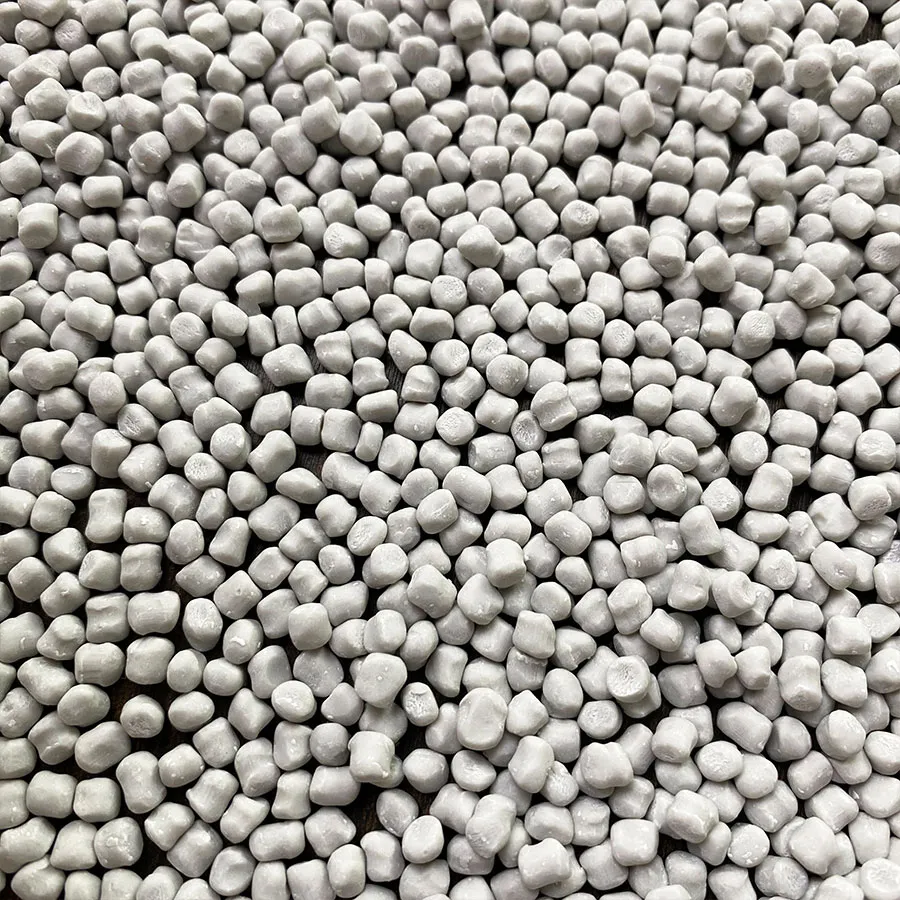
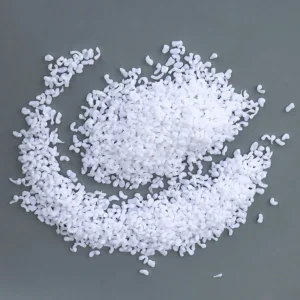
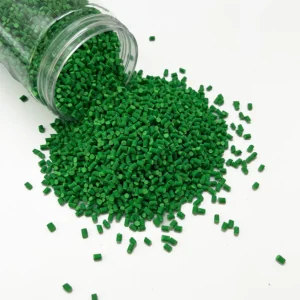
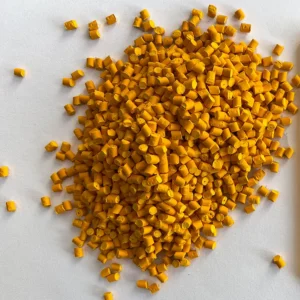
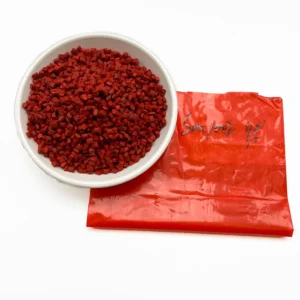


Injection Grade Talc Masterbatch | talc-filled rigidity and heat resistance for injection molding
Talc filler masterbatch is developed to improve stiffness, heat resistance, and dimensional stability in plastic parts requiring stronger structure and cleaner shape retention.
Talc masterbatch benefits for reinforced plastics
Enhances heat distortion resistance
Fine talc dispersion for balanced surface quality
Useful for injection, sheet, and extrusion products
Supports better dimensional stability in finished parts
Talc filler masterbatch is formulated to improve stiffness, heat resistance, and dimensional stability while maintaining practical processing performance. It supports injection molded parts such as containers, pallets, chairs, bottle caps, and industrial components that need repeatable appearance and stable processing. Raw material checks, process control, and final inspection strengthen repeatability from batch to batch.
FAQ
Which applications use talc filler masterbatch?
Typical uses include injection molding, sheet extrusion, and automotive plastic components.
How does talc help finished products?
Its lamellar structure supports rigidity and better shape retention in suitable formulations.
Can it be used for heat-resistant parts?
Yes. Improved heat distortion resistance is listed as a core advantage.
What dosage is commonly used for talc filler masterbatch?
A recommended range of 10%–40% is commonly used, depending on product targets.

Latest News

How to Choose a Reliable Masterbatch Manufacturer for Long-Term Supply
China began developing masterbatches in the mid-1970s. Currently, driven by economic growth and increasingly stringent environmental protection requirements, the advantages of masterbatch coloring technology have
What Is Masterbatch and Why Is It Important in Plastic Manufacturing?
What Are Masterbatches? While many people may not be familiar with the term “plastic masterbatch,” its applications are ubiquitous in our daily lives. Whether in
Pigment Masterbatch: A Practical Guide to Color Consistency in Plastics
For both manufacturers and consumers, color consistency is a key criterion for measuring product quality! Especially in the plastics industry, achieving precise colors is no
Rigidity and heat resistance in one filler system
Useful when the project needs more stiffness and heat performance than a simple economy filler can provide.